Technology
Smart Tech News, Gadgets, AI Updates & Digital World Insights

IBM Sub-1nm Chip: Nanostack Architecture Packs 100 Billion Transistors
IBM has unveiled the world's first sub-1nm chip technology, featuring a revolutionary 0.7nm Nanostack architecture that packs nearly 100 billion transistors onto a fingernail-sized chip, delivering up...
 Sk Jabedul Haque

Project Glasswing: Anthropic's Cybersecurity Defense Initiative with Mythos 5
Project Glasswing is Anthropic's trusted-access cybersecurity initiative that gives defenders early access to Claude Mythos 5 — the world's most powerful AI model for vulnerability discovery. Launched...
Sk Jabedul Haque
Geoffrey Hinton Military AI Reversal 2026
The Geoffrey Hinton military AI reversal 2026 marks a stunning shift as the Nobel Prize-winning "Godfather of AI" now endorses military AI applications, reversing his life-long skepticism amid escalat...
Sk Jabedul Haque
Apple WWDC 2026: iOS 27, the Siri Overhaul, and the AI Bet That Could Define the Next Decade
Apple's WWDC 2026 runs June 8-12 with a keynote on Monday, June 8 at 1:00 p.m. ET. The 50th-anniversary event is expected to unveil iOS 27 with the most aggressive Siri overhaul in the assistant's his...
Sk Jabedul Haque

SubQ 1M-Preview
Quick Answer: SubQ 1M-Preview is the first commercial subquadratic Large Language Model (LLM), launched on May 5, 2026. Unlike traditional transformers, it uses Subquadratic Sparse Attention (SSA) to ...
Sk Jabedul Haque
AI Voice Agents 2026: Complete Guide to Best Platforms, Pricing & Implementation
AI voice agents have transformed business communications in 2026, with the global market reaching $22 billion and costs dropping 80% since 2024. Top platforms like Vapi, Retell AI, and ElevenLabs now ...
Sk Jabedul Haque

OWASP Top 10 for LLM Applications 2026: Real RAG & Agent Attacks + Practical Defenses
The OWASP Top 10 for LLM Applications 2026 exposes critical vulnerabilities in AI systems, with prompt injection and RAG poisoning leading the list. Real-world attacks like Salesforce Agentforce’s Pip...
Sk Jabedul Haque
Meta’s MCI: The AI Employee‑Tracking Controversy Explained
Meta’s Model Capability Initiative (MCI) secretly records every mouse movement, keystroke and periodic screenshots on U.S. employee laptops to feed its AI agents. The company gives no opt‑out, prompti...
Sk Jabedul Haque
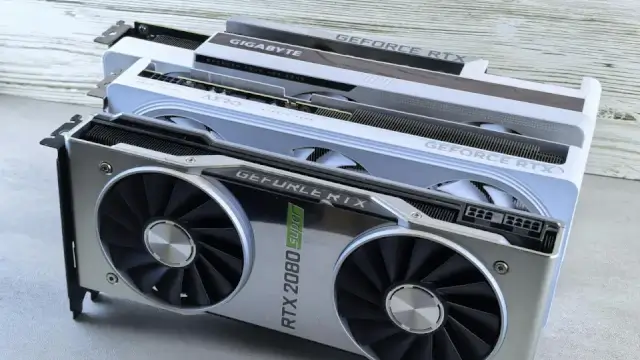
AI Cost vs Human Worker 2026: Why Companies Are Spending More on AI
Quick Answer: Yes, AI now costs more than human employees in many cases. Uber's CTO already burned through his 2026 AI budget on token costs. NVIDIA's VP admitted compute costs "far beyond" employee s...
Sk Jabedul Haque

TurboQuant vs GPTQ vs AWQ: Why Google's Method Needs No Retraining
TurboQuant is the only LLM quantization method that needs no calibration data, no retraining, and no dataset-specific tuning. GPTQ and AWQ both require a calibration dataset to find optimal quantizati...
Sk Jabedul Haque
PolarQuant + QJL: The Two-Stage Secret Behind TurboQuant's Zero Loss
TurboQuant achieves zero accuracy loss through two complementary algorithms: PolarQuant (random rotation + polar transform) and QJL (1-bit residual correction). Together, they compress KV cache 6x wit...
Sk Jabedul Haque
TurboQuant 3-Bit Quantization: Zero Accuracy Loss Explained
Google Research's TurboQuant compresses LLM KV cache to 3 bits with zero accuracy loss — achieving 6x memory reduction and 8x faster attention computation without any model retraining. How do you run ...
Sk Jabedul Haque