
What You'll Learn
- ✓ How the US-Iran war started and escalated through early 2026
- ✓ Why the Strait of Hormuz is the single most critical waterway for American gas prices
- ✓ The latest May 2026 developments including US self-defense strikes and Qatar peace talks
- ✓ What this conflict means for oil prices, the US economy, and American consumers heading into summer 2026
The US-Iran War 2026: How We Got Here
What began as escalating tensions between Washington and Tehran erupted into open conflict in late February 2026, triggered by a series of attacks on US personnel in the Middle East that the Trump administration directly attributed to Iran-backed militias. President Donald Trump, in his second term, responded with a sweeping military campaign targeting Iranian military infrastructure, nuclear facilities, and energy export capabilities.
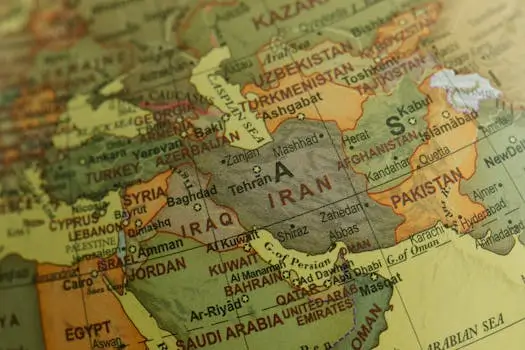
According to the Wikipedia article on the 2026 Iran war, Iran retaliated with missile and drone strikes on Israel, US military bases across West Asia, and US-allied Arab countries including Saudi Arabia and the United Arab Emirates. In one of the most consequential moves of the conflict, Iran declared the closure of the Strait of Hormuz a vital waterway through which roughly 20% of the world's oil passes.
The Strait of Hormuz crisis immediately sent shockwaves through global energy markets. Oil prices surged as tanker traffic ground to a halt, with insurance premiums for vessels transiting the Persian Gulf skyrocketing. The US Navy's Fifth Fleet, based in Bahrain, scrambled to establish safe passage corridors while engaging Iranian anti-ship missile batteries along the Iranian coastline.
The Ceasefire That Wasn't: April 2026 Diplomacy
After more than a month of intense fighting, a diplomatic breakthrough appeared on the horizon. On April 5, 2026, Pakistan introduced a draft proposal for a 45-day two-phased ceasefire framework. However, Iran rejected this proposal, instead submitting its own 10-point peace plan. The negotiations, mediated by Pakistan, ultimately produced a two-week ceasefire that took effect on April 8, 2026.
The ceasefire proved fragile. Both sides accused each other of violations within days. On April 18, Iran announced that it was closing the Strait of Hormuz again in response to the US refusing to lift its naval blockade a blockade that the United States had imposed to prevent Iranian oil exports. The US intensified its naval presence, leading to the 2026 United States naval blockade of Iran, which further escalated tensions.
On April 21, President Trump extended the ceasefire indefinitely, but the fighting never fully stopped. Sporadic clashes continued, and by late May, the situation had deteriorated significantly once again.
Breaking: May 25-26, 2026 US Self-Defense Strikes and Qatar Talks
As of May 26, 2026, the war has reached day 88 with the most significant escalation in weeks. According to live reports from CNN, the US military carried out what it called "self-defense strikes" targeting Iranian missile launch sites and boats around the Strait of Hormuz. The strikes hit two strategic Iranian ports abutting the waterway: Bandar Abbas and Qeshm, according to multiple US officials cited by CBS News.
The BBC reported that CENTCOM confirmed the strikes, insisting that the ceasefire framework remained technically in place even as negotiations continued. NBC News cited Pentagon officials saying the strikes were a direct response to Iranian positioning of anti-ship missiles within range of commercial shipping lanes.
Simultaneously, as The New York Times reported, delegations from both nations gathered in Qatar for what could be the most serious peace talks since the conflict began. Iran's foreign ministry spokesman signaled openness, hinting that the US could end the war in "Persian-style peace" on Tehran's terms, as reported by Al Jazeera. However, the simultaneous strikes complicated the diplomatic atmosphere, with Iranian negotiators accusing Washington of bad faith.
| Date | Event | Impact |
|---|---|---|
| Late Feb 2026 | US launches strikes on Iranian military and nuclear targets | Iran closes Strait of Hormuz; oil prices spike |
| Mar-Apr 2026 | Iran strikes Israel, US bases, Saudi Arabia, UAE | Regional war expands; oil tops $90 |
| Apr 8, 2026 | Pakistan-mediated 2-week ceasefire takes effect | Oil drops to $78; brief relief |
| Apr 18, 2026 | Iran re-closes Hormuz; US imposes naval blockade | Tensions re-escalate; shipping disrupted |
| Apr 21, 2026 | Trump extends ceasefire indefinitely | Fighting continues despite extension |
| May 25-26, 2026 | US self-defense strikes on Bandar Abbas and Qeshm; Qatar talks | Day 88 of war; oil market in turmoil |
Why the Strait of Hormuz Matters to Every American Driver
The Strait of Hormuz is a narrow 24-mile-wide waterway connecting the Persian Gulf to the Gulf of Oman and the open ocean. Despite its small size, it is arguably the world's most important energy chokepoint. According to the Strait of Hormuz Wikipedia entry, roughly one-fifth of global oil consumption passes through this strait every single day. That includes liquefied natural gas (LNG) shipments from Qatar, crude oil from Saudi Arabia, Iraq, Kuwait, and the UAE, and refined products destined for Asia, Europe, and North America.
When Iran threatens or closes the Strait of Hormuz, the impact is immediate and measurable at American gas pumps. The CNBC report "How the Iran war shook oil prices, and what comes next" noted that the conflict has already added significant premiums to crude futures. Bloomberg New Energy Finance projected that oil can hit $91 a barrel in late 2026 if the Iran disruption persists.
For American consumers, this translates directly into higher gasoline prices. The US, while less dependent on Persian Gulf oil than in previous decades, is still part of a globally integrated oil market. When the Strait of Hormuz is disrupted, Asian and European buyers bid up non-Gulf crude supplies, which pulls up prices for WTI and Brent benchmarks that US refineries pay. The end result is unmistakable: higher prices at the pump from California to New York.
The Economic Fallout: Oil Markets, Inflation, and the Global Economy
The economic impact of the 2026 Iran war has been profound. Global oil markets experienced their most severe supply shock since the 1990 Gulf War. Brent crude, which was trading around $72 per barrel in early February 2026, surged past $90 in March and has remained volatile ever since. The UK Parliament's research briefing on US-Iran ceasefire and nuclear talks highlighted that the conflict has disrupted approximately 17 million barrels per day of oil transit through the Strait of Hormuz.
The ripple effects extend well beyond energy markets. Supply chains that rely on container shipping through the Persian Gulf have been forced to reroute, adding weeks to transit times and billions in costs. The Hellenic Shipping News analysis tracked how shipping disruptions in the Strait of Hormuz cascaded through global logistics networks, with marine insurance premiums for Gulf transits increasing by more than 400% since the conflict began.
The Institute for the Study of War's Iran Update Special Report (April 6, 2026) documented how Iran's strategy of asymmetric warfare including missile attacks, drone swarms, and naval mines has made it extremely difficult for the US Navy to guarantee safe passage through the strait. The Center for Strategic and International Studies has described the situation as the most significant challenge to freedom of navigation since the Tanker Wars of the 1980s.
Trump Administration's Military Strategy: Strikes, Blockades, and Diplomacy
The Trump administration's approach to the Iran conflict has been characterized by a combination of massive military force and on-and-off diplomatic engagement. President Trump, who has long advocated for a maximum pressure strategy against Iran, authorized strikes on Iranian energy infrastructure early in the conflict a move that multiple news outlets described as targeting the backbone of Iran's oil export capability.
However, the administration has also shown a willingness to pursue diplomatic off-ramps. Trump's decision to extend the ceasefire indefinitely on April 21 signaled a desire to de-escalate, even as his military commanders continued to authorize tactical strikes against Iranian missile positions threatening shipping lanes. In late May, Trump adopted a notably more cautious tone, stating "no rush" when asked about the pace of negotiations, according to reports from news coverage of his remarks.
The Washington Institute for Near East Policy's assessment of US progress in the Iran war noted that while the US military has successfully degraded Iran's conventional capabilities, the Islamic Republic's asymmetric threats including missile boats, drones, and proxy forces remain largely intact. The Council on Foreign Relations analysis concluded that the war has both confirmed and contradicted long-standing US policy assumptions about military intervention in the Middle East.
What the Iran War Means for US National Security
The 2026 Iran war has fundamentally reshaped the US national security landscape in the Middle East. American military assets that were previously focused on great-power competition with China are now tied down in an increasingly costly conflict in West Asia. US bases in Iraq, Kuwait, Bahrain, Qatar, and the UAE have all come under Iranian missile and drone attack, forcing the Pentagon to divert advanced air defense systems back to the region.
The war has also strained relationships with key allies. Israel, which has been drawn into the conflict through Iranian retaliation strikes, has urged Washington to adopt an even more aggressive posture toward Tehran. Meanwhile, Gulf Arab states have privately expressed frustration with the disruption to their economies and the danger to their territorial waters. Pakistan's role as a mediator has elevated Islamabad's diplomatic standing while raising questions about the limits of its influence over Tehran.
Oil Price Outlook: What American Consumers Should Expect
For American consumers, the most direct impact of the US-Iran conflict comes at the gas station. The national average gasoline price in the US has risen by approximately 18-22% since the conflict began, according to industry tracking data cited by Reuters coverage. The summer driving season, which traditionally pushes prices higher, is now colliding with war-induced supply constraints.
Bloomberg's projection that oil could hit $91 per barrel in late 2026 is based on a scenario where Hormuz disruption continues or worsens. If a peace deal emerges from the Qatar talks, prices could drop sharply potentially back to the mid-$70s. However, if the conflict escalates further, some analysts have not ruled out a spike above $100 per barrel, which would push US gasoline prices to levels not seen since the 2022 inflation surge.
International Reactions and the Path to Peace
The international community has watched the US-Iran war with growing alarm. The United Nations has called for an immediate humanitarian ceasefire. China, which imports a significant portion of its oil from the Persian Gulf, has urged restraint and offered to mediate. Russia has positioned itself as a potential broker, though its relationship with both Washington and Tehran remains complicated by the ongoing Ukraine conflict.
The Qatar talks represent the most serious diplomatic initiative since the Pakistan-mediated ceasefire in April. Qatar, which maintains good relations with both the US and Iran, has positioned itself as an ideal venue for negotiations. The key sticking points remain the same: Iran wants a complete lifting of the US naval blockade and recognition of its right to peaceful nuclear energy, while the US demands verifiable guarantees that Iran will not develop nuclear weapons and will cease supporting proxy militias across the region.
| Peace Scenario | Likelihood | Oil Price Impact |
|---|---|---|
| Comprehensive deal from Qatar talks | Medium | Drop to $72-78 |
| Limited ceasefire with continued tensions | High | $80-85 range |
| No deal, continued Hormuz closure | Medium | $91-100+ |
| Major escalation (US ground invasion) | Low | $100+ |
Conclusion
The US-Iran war of 2026 and the Strait of Hormuz crisis represent one of the most consequential geopolitical events of the decade. As the conflict enters its 88th day with no end in sight, American consumers are feeling the pain at the pump, global supply chains are under unprecedented strain, and the entire Middle East is bracing for what comes next.
The May 25-26 US self-defense strikes and the simultaneous Qatar peace talks capture the dual-track nature of this conflict: military pressure and diplomatic engagement proceeding in parallel. Whether the Trump administration can successfully navigate both tracks toward a durable peace remains the defining question for global energy markets and American national security in the months ahead.
For now, the Strait of Hormuz remains the world's most dangerous chokepoint, and until a comprehensive agreement is reached, every American driver will continue to pay the price.