
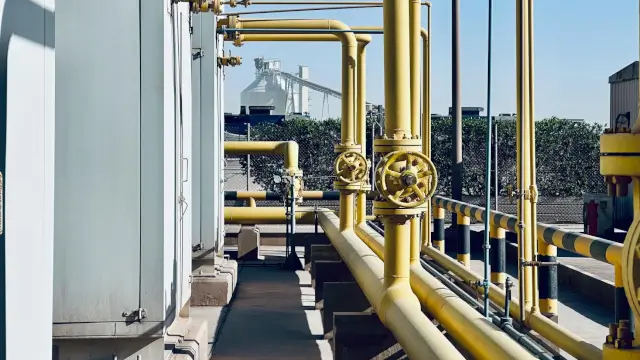
OPEC+ will almost certainly approve a third consecutive monthly output hike of roughly 188,000 barrels per day when its seven remaining members meet on Sunday, June 7, 2026, three Reuters sources say, even though the Iran war has prevented several producers from delivering the supply they have already been allocated.
What You'll Learn
- Why a third consecutive 188,000 bpd OPEC+ hike is coming on June 7 — and why the Iran war won't change that
- How the UAE's exit from the bloc reshaped the seven-member math and what the new baseline production looks like
- What the same hike means for WTI ($91.39), Brent ($94.16), and US gasoline prices that are already near $4.56 a gallon
- Why Capital Economics, the EIA, and Goldman Sachs disagree on where Brent ends 2026 — and which one is most likely right
- How an OPEC+ supply surprise feeds directly back into the PCE inflation print the Fed is now watching from Kevin Warsh's seat
When OPEC+ ministers gather by video link on Sunday, June 7, 2026, the world will be looking for a number. That number, almost certainly, is 188,000 — the same barrel-per-day output target adjustment the seven remaining OPEC+ members announced for June, and the same number three Reuters sources say is locked in for July. What makes the upcoming decision genuinely historic is not the volume. It is the context: the cartel is voting to add oil to a market that is, on paper, short, and it is doing so while the Strait of Hormuz remains effectively closed and several of its own members cannot deliver the supply they were already given in May.
The June 7 Meeting, In One Number
The upcoming ministerial is not a full OPEC conference. It is a video conference of the eight-country subgroup that has been unwinding the 2.2 million barrel-per-day voluntary cut since April — but it now operates with seven, not eight, members after the United Arab Emirates formally exited the bloc in late April. Saudi Arabia, Russia, Iraq, Kuwait, Kazakhstan, Algeria, and Oman are expected to confirm a third consecutive monthly increase of 188,000 barrels per day for July, the same volume they implemented for June, three OPEC+ delegates told Reuters on June 1. The pattern is deliberate: smaller, predictable, monthly increments are easier to defend politically than the 411,000 bpd hikes the same group ran in 2025, and they leave the door open to pause if Hormuz stays shut through the summer driving season.
Why Three Hikes In A Row Is Unusual — And Why This Time It Looks Routine
OPEC+ does not normally add supply in three consecutive months. The cartel's playbook since 2022 has been to cut, hold, and occasionally surprise with a small token hike. Three straight monthly increases of meaningful size — 206,000 bpd in May, 188,000 bpd in June, and a likely 188,000 bpd in July — is the most aggressive unwind of voluntary cuts since the start of the unwind cycle in April. From a market signaling standpoint, the message is: spare capacity is being returned, not held back. The cartel is, in effect, telling Saudi Arabia, Russia, and Iraq to keep producing, even if some of that production never physically reaches the global market because of the Iran-Israel war's disruption to the Strait of Hormuz.
This matters because target hikes are not delivered hikes. The seven producers collectively delivered only about 335,000 bpd of the 411,000 bpd target they set for July 2025, according to oilprice.com, and the gap is widely expected to be larger this year because Iran, Iraq, and Kazakhstan have all been physically unable to ship their full allocations around the Hormuz chokepoint. Yet the cartel keeps raising the target anyway — a strange strategy unless you accept that the target is now primarily a market-stability message and the actual barrels are a secondary concern. The Reuters sources confirm this interpretation: one delegate explicitly said the group is "determined to show the market it is honoring the unwinding plan, even if physical delivery slips."
The Hormuz Loophole — Why Iran War Hasn't Stopped The Hike
The Strait of Hormuz handles roughly 20% of global oil supply and 20% of global LNG supply, according to Brookings, and it has been effectively closed to most commercial tanker traffic since the US and Israel launched military strikes on Iran in late February 2026. Tanker traffic through the waterway has slowed to a trickle, the BBC reported in April, drastically reducing the amount of oil and gas available on global markets and causing prices to spike past $120 a barrel in early March. With that backdrop, the conventional reading of OPEC+ behavior in 2025 would have been to pause the unwind and defend price.
Instead, OPEC+ is doing the opposite — and there is a logic to it. Most OPEC+ exports to Asia and Europe are routed through pipelines that bypass Hormuz entirely: Saudi Arabia's East-West Pipeline to Yanbu on the Red Sea can move 5 million bpd, providing a critical supply route that the Trump administration's 2026 tariff strategy has not disrupted, the Abu Dhabi-Fujairah pipeline carries 1.8 million bpd, and Iraq's northern Kirkuk-Ceyhan pipeline avoids the strait altogether. The strait is critical for Iran, Iraq's southern exports, Kuwait, Qatar, and Bahrain — but for Saudi Arabia, the UAE, and the bulk of Saudi Aramco's incremental barrels, the strait is optional. The June 7 hike, in other words, is not a bet that Hormuz reopens. It is a hedge that OPEC+ can keep growing supply to the customers that don't need Hormuz.
UAE's Exit Has Quietly Reshaped The Math
The bloc's arithmetic changed materially in late April 2026 when the United Arab Emirates announced it was leaving OPEC — a shock departure that triggered a damage-control response from the remaining seven members. The headline cut, visible in the May 3 OPEC.org statement, was that the seven would now absorb a 188,000 bpd June hike, slightly less than May's 206,000 bpd, after subtracting the UAE's roughly 18,000 bpd share. The smaller headline number disguised a more important shift: the bloc's spare-capacity buffer is now thinner, the political dynamics inside the group are more Saudi-Russian aligned, and the UAE's own production — roughly 3 million bpd — is now free to be set independently of any OPEC+ quota.
The exit also complicates the question of how much oil the world is actually getting. Pre-exit OPEC+ data showed the bloc producing well below its authorized quotas because of overproduction cuts. The 4.57 million bpd of cumulative overproduction that eight OPEC+ members are scheduled to compensate for by June 2026, per oilprice.com, was tallied under the eight-member framework. With the UAE gone, the remaining seven's compensation schedule is being renegotiated. OPEC+ has said publicly that Iraq, Kazakhstan, and the UAE are submitting updated compensation plans, but the UAE's exit leaves a hole. Saudi Arabia, for its part, has indicated it will cut its own production by 500,000 bpd and Iraq by 211,000 bpd, but those cuts are on top of the unwinding target — meaning the net effect on global supply is closer to flat than the headline 188,000 bpd number suggests.
What It Means For WTI, Brent, And US Gasoline Right Now
The market has already priced in much of the OPEC+ supply story, and the price action in early June suggests traders see more downside than upside. Brent crude fell to $94.16 a barrel on June 2, 2026, down 0.87% on the day, and WTI fell to $91.39 a barrel, down 0.84%, per Trading Economics. Over the past month, Brent has lost 17.72% and WTI 14.13% — a sharp reversal of the $120 spike from early March. On a year-on-year basis, Brent is still up 43.47%, but the directional momentum is now firmly lower, driven by the combination of OPEC+ delivering more supply, the partial reopening of Hormuz to non-Iranian traffic, and weaker demand signals from Asia.
For US drivers, the impact is showing up at the pump with a lag. US retail gasoline is running near $4.56 a gallon as of late May 2026, according to industry data, after climbing 20% to $3.58–$3.60 a gallon in the weeks immediately following the Iran war's start. The Ameriprise rule of thumb is that every $10 increase in WTI adds about $0.20 to $0.30 to retail gasoline, and with WTI having come off roughly $20 from its March peak, retail gasoline is now working through the cycle. By mid-summer, AAA-tracked retail gasoline should ease toward $4.10–$4.20 a gallon, even with the OPEC+ hike, simply because the underlying crude component is cheaper than it was 60 days ago. That matters politically and economically: every $0.10 move in retail gasoline is roughly $4 billion in annualized consumer spending.
Why Capital Economics, The EIA, And Goldman Sachs Disagree On Year-End
Forecasters are unusually divided on where oil ends 2026, and the gap between them is the clearest signal of how much uncertainty the OPEC+ decision injects into the outlook. Capital Economics has revised its Q4 2026 Brent forecast to $80 a barrel, up from $75, citing tighter-than-expected supply as the seven-member bloc struggles to deliver on its own targets. The EIA's Short-Term Energy Outlook is more bearish, projecting WTI to drop to an average of $89 a barrel in Q4 2026 and $79 a barrel in 2027, on the assumption that Middle East production continues to rise and demand stays muted. Goldman Sachs, often the most conservative, has lifted its Q4 2026 Brent forecast by $6 to $60 a barrel and its Q4 WTI estimate by $6 to $56 a barrel, citing lower-than-expected demand growth and rising non-OPEC supply from the US, Brazil, and Guyana.
The wide range — $56 to $89 for Q4 WTI — reflects a genuine debate about the durability of the supply response and the trajectory of demand. If the Iran war de-escalates and Hormuz fully reopens, Goldman is closest to right. If Hormuz stays disrupted through Q3 and OPEC+ can't deliver its announced supply, the EIA is the floor and Capital Economics is the ceiling. The June 7 meeting won't resolve that debate, but it will sharpen it: a clean 188,000 bpd announcement without caveats tilts the Goldman view; a delayed decision or a pause-to-assess would tilt toward Capital Economics. Given Reuters' three-source reporting, the clean 188,000 bpd is the base case — but traders are likely to react to the language around Hormuz and compliance as much as to the headline number, and as our recent stock market week-ahead analysis flagged.
The 4.57 Million bpd Overproduction Problem OPEC+ Is Quietly Burying
Behind the polite communique language, OPEC+ faces a credibility problem it has not fully acknowledged. Eight members, including the UAE before its exit, were required to compensate for 4.57 million bpd of cumulative overproduction by June 2026. Some of that overproduction came from Iraq, Kazakhstan, and Russia during the 2022-2024 quota-war period. Some came from the UAE itself. The compensation schedule was supposed to deliver additional voluntary cuts, on top of the 2.2 million bpd baseline, until the cumulative overproduction was zeroed out. As of mid-2026, oilprice.com's tracking suggests the bloc is still well short of that target, and the new 188,000 bpd monthly hikes are happening while compensation cuts are still in progress.
The market implication is that OPEC+ is essentially rolling the overproduction problem forward — paying for today's supply growth with tomorrow's accountability deficit. That works in a tight market. It works less well in a market where demand is softening and non-OPEC supply is rising. Saudi Arabia, which carries the largest share of any potential compensation cut, has shown no public willingness to extend its 500,000 bpd voluntary reduction beyond its current schedule, and Russia has been openly skeptical of additional cuts since early 2025. The June 7 meeting is unlikely to address the compensation problem head-on, but the longer it is deferred, the less credible the bloc's "we are restoring market balance" messaging becomes — and the more pressure builds on a future meeting to either deliver a real cut or to formally acknowledge that the compensation framework has broken.
How An OPEC+ Supply Surprise Feeds Straight Back Into PCE
For the Federal Reserve, the most important downstream effect of the OPEC+ decision is not the price of oil — it is the price of gasoline, and the lag between crude and retail pump prices. Goldman's working rule of thumb is that a sustained 10% increase in oil prices boosts headline PCE inflation by 0.2 percentage points and core PCE by 0.04 percentage points. Applied to the past 60 days, that means the roughly $30 per barrel drop in WTI from the early-March $120 peak to the early-June $91 area has already shaved about 0.6 percentage points off headline PCE, and another 0.1–0.2 percentage points is likely to flow through to retail gasoline by the July PCE print. That is a meaningful disinflationary impulse for a Fed that is now navigating Kevin Warsh's first full quarter as Chair with the April PCE having already printed at a 3-year high of 3.8%.
The interaction is delicate. If OPEC+ delivers the 188,000 bpd hike cleanly on June 7 and Hormuz traffic continues to normalize, the oil-driven disinflation tailwind to PCE persists through the summer, and the Fed has one more data point arguing for patience on rate cuts. If the hike is delayed or caveated, or if Hormuz re-closes, the oil component of PCE reverses in Q3, and the inflation problem from the April print returns with the gas-driven component now contributing alongside services. Either way, the June 7 OPEC+ decision is a direct input into the FOMC's June 16-17 meeting — and, by extension, into Kevin Warsh's first formal test as Fed Chair.
Bottom Line: OPEC+ Will Hike, Markets Will Read The Fine Print
OPEC+ will almost certainly confirm a third consecutive 188,000 bpd output target increase for July when its seven remaining members meet on Sunday, June 7, 2026, three Reuters sources say, despite the ongoing disruption to the Strait of Hormuz from the Iran war. The headline number is not the story. The story is that the cartel is choosing to add supply in a market that is, on paper, still tight, that several of its own members cannot deliver the supply they have already been allocated, and that the bloc's 4.57 million bpd overproduction compensation framework is quietly being rolled forward rather than cleared. The price action — Brent at $94.16, WTI at $91.39, retail gasoline easing from $4.56 — suggests the market sees more downside than upside, but the path through year-end depends on whether the Iran war de-escalates and whether OPEC+ can actually deliver. Capital Economics sees $80 Brent, the EIA sees $89 WTI, and Goldman sees $60 Brent by Q4. The June 7 meeting won't close that gap, but it will give the market its first real data point on which forecast is most likely to be right.
For US drivers, the most important downstream number is retail gasoline, a theme our week-ahead preview also highlighted, which should ease toward $4.10–$4.20 a gallon by mid-summer if the OPEC+ hike and the partial Hormuz reopening both hold. For the Fed, the OPEC+ decision is an input to the July PCE print and, by extension, to the FOMC's June 16-17 meeting — Kevin Warsh's first formal rate decision as Fed Chair, an outcome our Fed rate forecast has been tracking for weeks. For OPEC+ itself, the meeting is a credibility test: the bloc can keep raising targets, but the longer the 4.57 million bpd compensation deficit is rolled forward, the more the "we are restoring market balance" message rings hollow. Sunday's number is 188,000. The harder number — whether the seven members can actually deliver the oil they have promised — is the one traders will be watching through the rest of 2026.
Last Updated: June 02, 2026 | Source: Reuters, OPEC.org, CNBC, Capital Economics, U.S. Energy Information Administration (Official Website)