
What You'll Learn
- Why the N1X matters — how Nvidia's return to consumer CPUs signals a fundamental shift in PC architecture
- Technical specifications — the 20-core ARM CPU, RTX 5070 GPU, and NVLink interconnect that make N1X unique
- Industry-wide disruption — Intel Arc G3, Qualcomm Snapdragon C, and AMD 2nm Venice all announced at Computex 2026
- What it means for buyers and investors — pricing, availability, and the memory crisis threatening every budget device
What Is the Nvidia N1X and Why Does It Matter?
Every major chip executive on the planet converged on Taiwan this week, and they did not arrive empty-handed. Computex 2026, which opened Tuesday at the Taipei Nangang Exhibition Center, has already redrawn the competitive landscape across gaming handhelds, budget laptops, AI server silicon, and ARM-based personal computers. But one announcement stands above the rest: Nvidia's N1X chip.
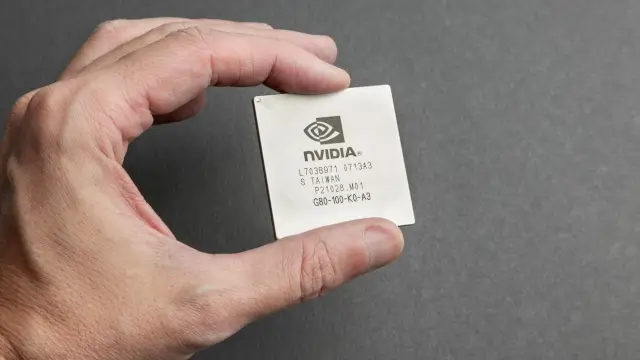
The N1X is Nvidia's first system-on-chip designed to go inside a Windows laptop rather than a data center rack. It marks the company's return to consumer computing after more than a decade — and it arrives at precisely the moment when the PC industry is being reshaped by ARM architecture, AI workloads, and surging memory costs.
Jensen Huang landed at Taipei's Songshan Airport on Saturday, May 23, and declared that he had "a lot to do." He has spent the week in motion ever since. At a developer-focused gathering in Taipei on Friday — the same day Nvidia, Microsoft, and Arm each posted the GPS coordinates of the Taipei Music Center alongside the message "a new era of PC" — Huang teased the rest of 2026: "The second half of this year is going to be very, very busy with Grace Blackwell, Vera Rubin, and we have a surprise new product that we haven't told anyone about yet."
That surprise has since been confirmed. The N1X was revealed at Huang's GTC Taipei keynote at 11 a.m. Monday local Taipei time — 11 p.m. ET Sunday night. And it changes the equation for every laptop buyer, every PC manufacturer, and every investor watching the semiconductor sector.
Inside the N1X: Technical Specifications Explained
The N1X is not simply a laptop chip — it is a complete system-on-chip that rewrites what a portable computer can do. Here is what the hardware delivers:
| Component | Specification | Why It Matters |
|---|---|---|
| CPU | 20-core ARM v9 (MediaTek-designed) | First Nvidia consumer CPU in over a decade |
| GPU | 6,144 CUDA cores (RTX 5070 equivalent) | Discrete-class GPU with full CUDA stack in a laptop |
| Process | TSMC 3nm (N3E) | Cutting-edge manufacturing, premium pricing |
| Interconnect | NVLink at 300 GB/s | CPU-GPU data transfer at data center speeds |
| Memory | Up to 128GB LPDDR5X unified | Run 100B+ parameter AI models locally |
| Software | Full CUDA support, Windows on ARM | Same AI dev environment as data center accelerators |
The specification that matters most is the 300 GB/s NVLink connection between the CPU and GPU dies. This is the same interconnect technology used in Nvidia's data center AI accelerators, shrunk down to fit inside a laptop chassis. It means the CPU and GPU can share data at speeds that make discrete laptop GPUs look sluggish by comparison.
For AI developers, the implications are significant. The N1X's unified memory architecture with up to 128GB of LPDDR5X means a developer can load a 100-billion parameter large language model entirely into memory on a laptop — something that previously required a desktop workstation or cloud instance. With full CUDA support, the same code that runs on an H100 in the cloud can run on an N1X laptop, making this a portable AI development platform.
But there are caveats. Although the GPU carries the same 6,144 CUDA cores as a desktop RTX 5070, power consumption in a laptop chassis will be significantly lower, meaning real-world gaming performance will not match a full desktop card. And while ARM-based CPUs have improved dramatically, real-world gaming performance on Windows on ARM remains inconsistent — as Qualcomm's Snapdragon X series has demonstrated. The N1X is best understood as a creator and AI development powerhouse first, and a gaming machine second.
The Platform Play: Why Microsoft and Arm Are All In
The N1X is not a one-company announcement. Microsoft and Arm both co-signed the "new era of PC" tease, signaling that Windows on ARM support for the N1X is already in place and that this is a coordinated platform push. This is a critical detail: the chip itself is impressive, but without software ecosystem buy-in, it would be a curiosity rather than a category-defining product.
Microsoft's involvement means that the full Windows on ARM compatibility layer — including x86 app translation — will be optimized for the N1X from day one. This addresses the biggest weakness of previous ARM laptop chips: the software gap. If Microsoft delivers smooth compatibility for the vast majority of Windows applications, the N1X becomes a viable primary machine rather than a secondary development tool.
Arm's role is equally strategic. The company has been aggressively expanding its PC ambitions, and the N1X represents the highest-profile validation of its ARM architecture in the Windows ecosystem. Arm recently doubled its AGI CPU revenue forecast to $2 billion by 2028, driven by orders from OpenAI, Cerebras, and hyperscalers investing in agentic AI infrastructure. The N1X launch accelerates that trajectory by putting ARM architecture in front of mainstream consumers.
Dell, Lenovo, Asus, and MSI are all preparing launch devices. First machines are expected before the 2026 holiday season, with broader availability extending into early 2027. Pricing will reflect TSMC 3-nanometer manufacturing costs and premium LPDDR5X memory, placing these devices well above the entry tier — likely north of $3,000 for configurations matching the 128GB memory spec.
EU Emergency Chip Seizure: How Europe's Semiconductor Power Grab Threatens America's Tech Supply Chain
Intel Arc G3: The First Purpose-Built Gaming Handheld Chip
While Nvidia grabbed headlines with the N1X, Intel made a significant move of its own. On May 28, the company unveiled the Arc G3 and Arc G3 Extreme — its first chips built from scratch for gaming handhelds rather than adapted from laptop lines.
The compute tile is manufactured on Intel's 18A process at Fab 52 in Chandler, Arizona — the same node used in the company's Core Ultra Series 3. This makes it the first gaming silicon produced domestically on Intel's most advanced logic node, a detail with geopolitical significance as the United States pushes to onshore semiconductor manufacturing.
The Arc G3 Extreme carries a 14-core CPU arrangement (2 performance cores, 8 efficiency cores, 4 low-power efficiency cores) alongside a full Arc B390 graphics processor with 12 Xe3 cores. Early independent testing at CES 2026 confirmed that the Arc B390 delivers playable performance in demanding titles at 1080p, with Cyberpunk 2077 running smoothly at the High preset — an outcome Club386 described as "extraordinary for an integrated GPU."
The platform also delivers 50 trillion operations per second of dedicated neural processing unit compute, with combined GPU and NPU capacity reaching 180 TOPS — enabling Intel's XeSS 3 upscaling and Multi-Frame Generation, the two techniques most relevant for maintaining playable frame rates at handheld display resolutions.
First devices to carry the Arc G3 Extreme include the Acer Predator Atlas 8 and the MSI Claw 8 EX AI+, both expected in June 2026. GPD and OneXPlayer are also listed as platform partners. AMD's Ryzen Z-series — which has powered the Steam Deck, ROG Ally X, and Lenovo Legion Go S — faces its first purpose-built competitor from Intel since the handheld gaming category emerged.
Software has historically been Intel's weakest link in gaming graphics. The company is addressing this directly with Day-0 game driver support and Precompiled Shader Distribution, a feature designed to reduce the startup stalls and frame-rate hitches that have made Windows handheld gaming frustrating on earlier Intel hardware.
Qualcomm Snapdragon C: The $300 Windows Laptop Play
At the opposite end of the price spectrum, Qualcomm announced the Snapdragon C platform on May 28 with an explicit target: Windows laptops priced at $300 and above. The announcement is a direct response to Apple's $599 MacBook Neo (or $499 for students), which reset consumer expectations for what an affordable laptop can deliver in battery life and performance.
Unlike Qualcomm's premium Snapdragon X series — which uses the company's custom-designed Oryon CPU cores — the Snapdragon C uses Kryo cores derived from Qualcomm's smartphone lineup, on a 6-nanometer process. That design choice keeps costs down but carries a meaningful consequence: the Snapdragon C does not meet Microsoft's requirements for Copilot+ PC certification. Buyers looking for the full suite of on-device AI features — including real-time translation, Cocreator in Paint, and Windows Recall — will need a Snapdragon X or equivalent device.
What the Snapdragon C does provide is an integrated neural processing unit capable of on-device AI workloads at the entry tier, alongside fanless or low-noise designs and all-day battery life. Acer, HP, and Lenovo have committed to launch partner devices. Kedar Kondap, Qualcomm's senior vice president and general manager of Compute and Gaming, framed the announcement as an access play: "We're delivering modern computing experiences that help our ecosystem reach new audiences."
The timing carries risk. Gartner has projected a 17 percent increase in average PC prices in 2026 as combined DRAM and SSD costs surge — a headwind that disproportionately squeezes entry-level devices. Gartner senior director analyst Ranjit Atwal has warned that the sub-$500 PC segment could disappear entirely by 2028. A $300 laptop's viability depends heavily on whether OEMs build to the Snapdragon C chip's best potential, rather than treating it as a license to cut every other component to the floor.
AMD EPYC Venice: The First 2nm Chip Enters Production
Lisa Su arrived in Taipei on May 22, a day ahead of Huang. Her headline announcement came before the show floor opened: AMD's sixth-generation EPYC server processor, codenamed Venice, became the first high-performance computing product in any company's lineup to enter production on TSMC's 2-nanometer process.
The 2nm node introduces gate-all-around nanosheet transistors — a manufacturing technique that improves transistor switching control and reduces power leakage compared to the FinFET architecture used in 3nm and 5nm chips. For Venice specifically, the transition delivers up to 70 percent better performance than its predecessor, more than doubled per-socket memory bandwidth (from 614 GB/s to 1.6 TB/s), and a 2x improvement in CPU-to-GPU bandwidth.
AMD also announced that it is investing more than $10 billion in Taiwan's AI infrastructure ecosystem, targeting companies across the advanced packaging supply chain including ASE, Powertech, and Unimicron. Su described the milestone plainly: "Ramping Venice on TSMC 2nm process technology marks an important step forward in accelerating the next generation of AI infrastructure."
A follow-on processor codenamed Verano is already in development on the same 2nm node, optimized specifically for agentic AI workloads through native LPDDR memory support. AMD's Helios rack-scale platform, which integrates Venice CPUs with Instinct MI450X graphics processors, is scheduled for multi-gigawatt deployments in the second half of 2026.
| Company | Key Announcement | Process Node | Target Market |
|---|---|---|---|
| Nvidia | N1X ARM Laptop SoC | TSMC 3nm | Premium Laptops & AI Dev |
| Intel | Arc G3 Gaming Handheld | Intel 18A | Gaming Handhelds |
| Qualcomm | Snapdragon C | 6nm | $300 Budget Laptops |
| AMD | EPYC Venice | TSMC 2nm | AI Data Center Servers |
Nvidia's $100 Billion Taiwan Investment
The supply chain context behind every executive presence in Taipei crystallized on May 27, when Huang addressed roughly 1,000 Nvidia employees at the site of the company's planned first overseas headquarters. The Constellation campus will occupy two plots in the Beitou-Shilin Technology Park under a 50-year lease with the Taipei city government, with construction beginning in June or July 2026 and full operations targeted for 2030.
Huang disclosed that Nvidia currently spends $100 billion per year in Taiwan — up from $10 billion to $15 billion annually four or five years ago — and is on a path to $150 billion annually. That figure reflects procurement, manufacturing partnerships, and infrastructure investment rooted in TSMC's role in building AI accelerators.
"Taiwan is the epicenter of the AI revolution," Huang said. "This is where the chips come, packaging comes, this is where the systems are made, this is where AI supercomputers were created." The campus is expected to house roughly 4,000 direct Nvidia employees and generate more than 10,000 total jobs when fully operational.
Nvidia's partner network in Taiwan has grown from 10 partners years ago to 50 five years ago, and to 150 today — the full breadth of the Vera Rubin AI platform's supply chain footprint. The Vera Rubin platform — combining the Vera CPU with the Rubin GPU — entered full production earlier in 2026 and delivers approximately 3.5 times the AI training performance and five times the inference performance of its predecessor, Blackwell.
These numbers underscore a broader reality: the AI revolution is not being built in Silicon Valley. It is being built in Taiwan. Every major AI chip — from Nvidia's Vera Rubin to AMD's Venice to Apple's M-series — passes through TSMC's fabrication plants and advanced packaging lines. The geopolitical implications of this concentration are profound, particularly as the EU moves to seize semiconductor supply chain control.
The Memory Crisis: Why Every Budget Device Is at Risk
Across the entire Computex show, one constraint threatens every company's consumer hardware ambitions: memory prices. Gartner projects a 17 percent increase in average PC prices in 2026 as DRAM and SSD costs surge — a dynamic that disproportionately squeezes the entry-tier devices that Qualcomm's Snapdragon C, Intel's handheld lineup, and Nvidia's N1X all depend on for volume.
The memory crisis is driven by multiple factors. The AI boom has created insatiable demand for high-bandwidth memory (HBM) used in data center accelerators, diverting manufacturing capacity away from consumer-grade DRAM. Samsung, SK Hynix, and Micron — the three companies that produce virtually all of the world's memory chips — have shifted production toward HBM3E and HBM4, which command significantly higher margins than standard DDR5 or LPDDR5X modules.
For consumers, this means the laptop you planned to buy at $500 this year may cost $585 or more. For manufacturers, it means the razor-thin margins on budget devices become even thinner. And for Nvidia's N1X, which depends on LPDDR5X memory for its unified architecture, it means the $3,000+ price floor is unlikely to come down anytime soon.
Intel CEO Lip-Bu Tan's Computex presence centers on reclaiming PC market share that Intel has ceded to Qualcomm and AMD over the past two years. He hosted a supply chain reception on June 1, ahead of his official keynote, designed to consolidate relationships with downstream PC assemblers — ASUS, Acer, Compal, and Pegatron — whose production pipelines determine which chips actually reach consumers.
The deeper strategic play is what Intel's 18A process node demonstrates: that Intel can manufacture leading-edge logic domestically in the United States, at performance levels competitive enough to challenge AMD's Ryzen Z-series. But how OEMs balance chip cost against memory and storage specifications will determine whether the $300 Windows laptop becomes a genuine category or a number that looks good in a Computex keynote slide and disappoints inside a box.
N1X vs Apple M4 vs AMD Strix Halo: The ARM Laptop Battle
The N1X does not exist in a vacuum. It enters a market where Apple's M4 Max and AMD's Strix Halo are already established. Here is how the three platforms compare:
| Feature | Nvidia N1X | Apple M4 Max | AMD Strix Halo |
|---|---|---|---|
| CPU Architecture | ARM v9 (20 cores) | ARM v9 (16 cores) | x86-64 (Zen 5, 16 cores) |
| GPU Cores | 6,144 CUDA (RTX 5070 class) | 40-core GPU | 40 RDNA 3.5 CUs |
| Max Memory | 128GB LPDDR5X | 128GB LPDDR5X | 128GB LPDDR5X |
| AI Software | Full CUDA stack | Core ML, Metal | ROCm (improving) |
| OS | Windows on ARM | macOS | Windows (x86) |
| Expected Price | $3,000+ | $3,499+ | $2,500+ |
The N1X's key differentiator is CUDA. While Apple's Core ML and AMD's ROCm have made significant strides, CUDA remains the dominant software ecosystem for AI development. For researchers, data scientists, and AI engineers who need to develop and test models on a laptop before deploying to data center clusters, the N1X offers something neither Apple nor AMD can match: a portable machine with the same programming environment used across Nvidia's entire accelerator lineup.
The risk for Nvidia is the same one that has plagued every Windows on ARM device: software compatibility. If x86 app translation stutters, if gaming frame rates disappoint, or if professional applications refuse to run cleanly, the N1X will be remembered as an impressive chip that never found its audience. The success of this launch depends less on silicon and more on the software ecosystem that Microsoft, application developers, and Nvidia itself deliver over the next six months.
What Investors Should Watch
For investors tracking the semiconductor sector, Computex 2026 provides several signals:
Nvidia (NVDA): The N1X positions Nvidia to compete in the $300 billion PC market, not just the data center. If the chip succeeds, it opens a new revenue stream beyond gaming GPUs and AI accelerators. The Vera Rubin platform's production ramp and the $100 billion annual Taiwan spend signal that Nvidia's AI infrastructure business is scaling faster than any analyst projected two years ago. Watch for pricing details on N1X laptops — premium pricing could limit volume but maximize margins.
Intel (INTC): The Arc G3 is Intel's first credible gaming silicon in years, and the 18A domestic manufacturing story has geopolitical tailwinds. But the memory crisis threatens every budget device Intel is targeting. Watch Intel's Computex keynote for volume commitments from OEM partners — without real device launches, the Arc G3 is just a chip on a slide.
AMD (AMD): The EPYC Venice 2nm milestone is significant for AMD's data center positioning, but the consumer story at Computex is less compelling. The company faces its first real handheld gaming competition from Intel, and the N1X challenges AMD's Strix Halo in the premium laptop segment. Watch for AMD's response — likely at its own event later this summer.
TSMC (TSM): Every chip announced at Computex 2026 — N1X, Venice, Arc G3 — flows through TSMC. The company's 2nm and 3nm capacity is the bottleneck that determines how fast the entire industry can ship. Taiwan's centrality to the AI revolution, as Jensen Huang emphasized, makes TSMC the single most important company in the global semiconductor supply chain.
Memory makers (Samsung, SK Hynix, Micron): The memory price surge benefits these companies in the short term but risks killing demand in the long term. If Gartner's 17% price increase projection holds, budget PC segments could shrink dramatically, reducing total addressable market for the entire PC ecosystem.
The Future of the PC: What Computex 2026 Tells Us
Computex 2026 is not just a trade show — it is a declaration of where the PC industry is heading. The convergence of ARM architecture, AI-capable silicon, and memory constraints is creating a market that looks fundamentally different from the one that existed 12 months ago.
The Nvidia N1X represents the most aggressive move in this transformation. By bringing data center-class CUDA software to a laptop form factor, Nvidia is betting that the next generation of developers and creators will want AI capability at their fingertips, not just in the cloud. If the bet pays off, it reshapes not just the laptop market, but the entire AI development workflow.
Intel's Arc G3 challenges AMD's dominance in gaming handhelds, Qualcomm's Snapdragon C fights to keep the $300 laptop alive, and AMD's 2nm Venice pushes the boundaries of what server chips can do. Together, these announcements paint a picture of an industry in rapid transition — one where the winners will be the companies that can balance performance, power efficiency, software ecosystem, and manufacturing cost.
The memory crisis adds urgency to every announcement. As DRAM and SSD prices climb, the gap between premium and budget devices will widen. Companies that can deliver compelling experiences at accessible price points — or justify premium pricing with genuinely differentiated capability — will thrive. The rest will struggle.
For PC buyers, the message is clear: the next 12 months will bring the most significant wave of new hardware in a decade. If you can wait, the N1X laptops arriving in late 2026 and early 2027 may be worth the patience. If you need a machine now, the memory crisis means prices are only going up.
Further Reading: For broader context on the AI server demand driving Nvidia's growth, see our Dell AI Server Boom analysis, and the EU Emergency Chip Seizure story. For background on Nvidia's history and the GPU architecture powering the N1X, see the Nvidia Wikipedia entry.
Last Updated: June 1, 2026 | Source: TechTimes, WCCFTech, Nvidia Blog (Official Websites)