
What You Will Learn
- • What the Nvidia $2 billion Synopsys deal means for AI chip design
- • How CUDA-X libraries accelerate Electronic Design Automation tools up to 30x
- • Why India IT companies like Tata Elxsi, Cyient, and KPIT are positioned to benefit
- • The $18.5 billion EDA market growth outlook and investment implications
Why Nvidia Invested $2 Billion in Synopsys
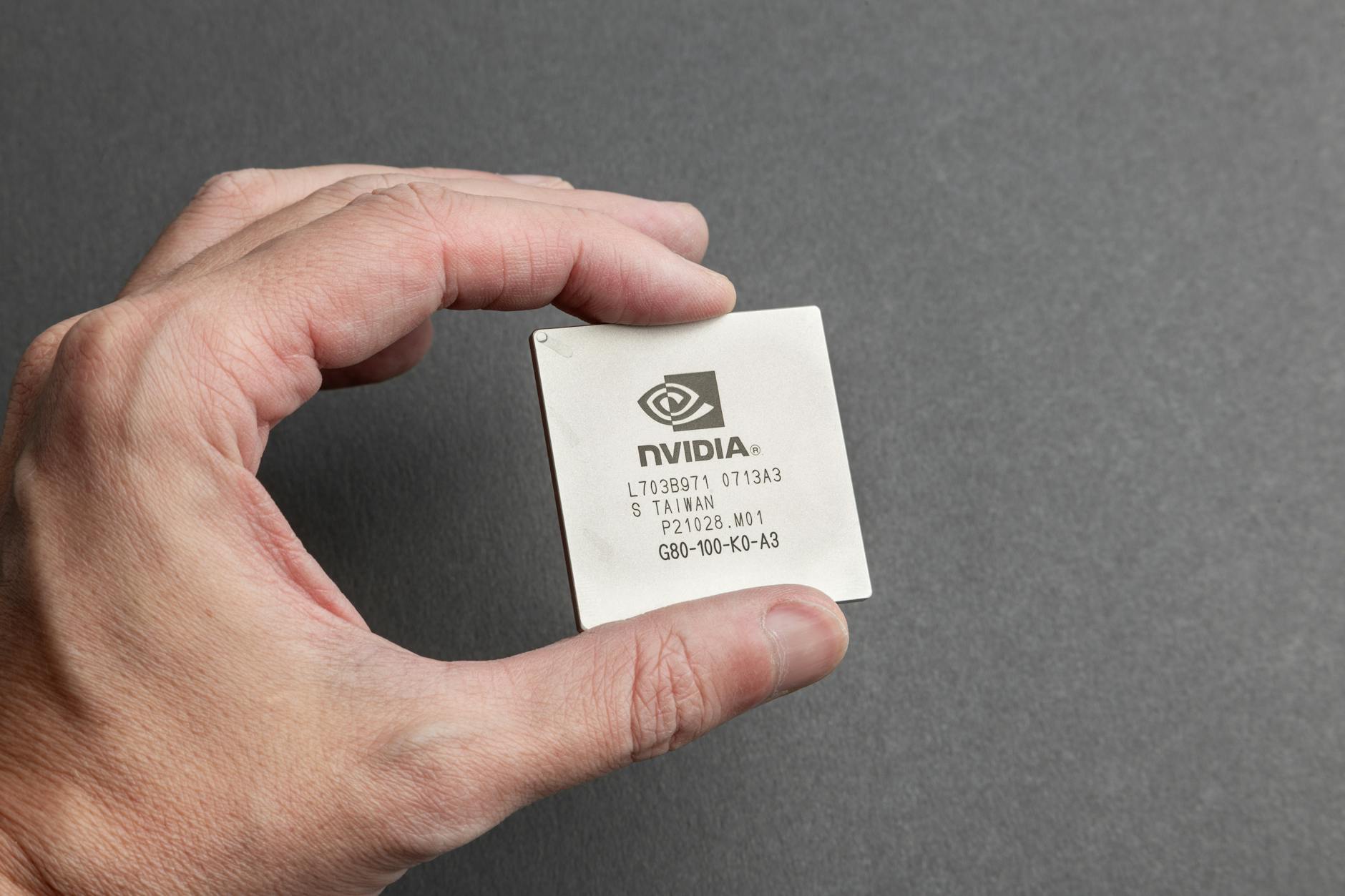
On December 1, 2025, Nvidia made one of the largest strategic bets in semiconductor history. The company purchased $2 billion worth of Synopsys common stock at $414.79 per share as part of an expanded multi-year partnership. This deal goes far beyond a simple equity investment. It signals Nvidia\'s intent to control the entire AI chip design stack — from hardware to the software tools that design next-generation chips.
Synopsys is the world\'s largest Electronic Design Automation company, controlling approximately 30 percent of the global EDA market. Together with Cadence Design Systems and Siemens EDA, these three companies dominate roughly 75 percent of all chip design software worldwide. For Nvidia, controlling the tools that design AI chips is as strategic as designing the chips themselves.
The partnership announced on the same day as the investment focuses on three core areas: accelerating Synopsys software using NVIDIA CUDA-X libraries, developing agentic AI engineering tools through NVIDIA NeMo and Synopsys AgentEngineer, and creating Omniverse digital twins for simulation. As NVIDIA CEO Jensen Huang stated, CUDA GPU-accelerated computing is transforming how chips are designed and verified.
| Deal Parameter | Details |
|---|---|
| Investment Amount | $2 billion in Synopsys common stock |
| Purchase Price | $414.79 per share |
| Announcement Date | December 1, 2025 |
| Partnership Duration | Multi-year strategic collaboration |
| Key Technologies | CUDA-X, AI-Physics, Omniverse digital twins |
What is EDA and Why Does It Matter?
Electronic Design Automation software is the backbone of semiconductor manufacturing. Every chip in your phone, laptop, data center, or electric vehicle was designed using EDA tools. These tools handle everything from circuit layout to verification, simulation, and manufacturing preparation. Without EDA, modern chips with billions of transistors simply cannot be designed.
The global EDA market is valued at approximately $18.5 billion in 2026 and is projected to reach $34.5 billion by 2033, growing at a compound annual growth rate of 9.30 percent. Another market research report values the EDA tools market at $19.81 billion in 2026, with projections reaching $28.39 billion by 2030 at a 9.4 percent CAGR. This growth is being driven by three factors: the explosive demand for AI chips, increasing complexity of advanced node designs (3nm, 2nm), and the need for faster verification cycles.
Synopsys holds approximately 30 percent of this market, making it the largest pure-play EDA company. Its competitors include Cadence Design Systems and Siemens EDA (formerly Mentor Graphics). Together, these three companies control 75 percent of the global EDA market. The remaining share is split among smaller players and in-house tools at major chipmakers like Intel and Samsung.
| EDA Company | Market Share | Key Strengths |
|---|---|---|
| Synopsys | ~30% | Digital design, IP, verification |
| Cadence Design | ~25% | Custom analog, Virtuoso platform |
| Siemens EDA | ~20% | PCB, IC packaging, DFT |
| Others | ~25% | In-house, Ansys, Altium |
The Asia Pacific region is particularly important for EDA growth, with the market expected to reach $10.63 billion by 2035, up from $4.37 billion in 2025. India plays a significant role in this growth, as many global EDA companies have engineering centers in Bengaluru, Hyderabad, and Pune. You can read more about the broader AI infrastructure trend in our article on Agentic AI and its impact on semiconductor design.
How CUDA-X Accelerates Chip Design
The core technology behind this partnership is NVIDIA CUDA-X — a collection of GPU-accelerated libraries, tools, and technologies optimized for high-performance computing. In the context of chip design, CUDA-X enables Synopsys tools to run significantly faster on NVIDIA GPU hardware compared to traditional CPU-only processing.
Synopsys demonstrated in March 2025 that utilizing CUDA-X libraries on the NVIDIA Hopper architecture can accelerate time to results up to 100x for certain simulation workloads. This allows customers to simulate and verify chip designs at speeds and scales that were previously impossible. The company projected up to 30x speedup for EDA workloads across its product portfolio when fully integrated with NVIDIA hardware.
Real-world results are already emerging. At GTC 2026, Synopsys showcased how Honda achieved simulations that ran 34x faster and 38x cheaper using the combined Synopsys-NVIDIA technology stack. This demonstrates that the partnership is delivering tangible performance and cost benefits in production environments, not just theoretical benchmarks.
The three pillars of the CUDA-X chip design acceleration are:
- •GPU-accelerated simulation — Running circuit simulations on thousands of GPU cores simultaneously, reducing compile times from hours to minutes
- •AI-Physics technology — Using AI models trained on physical behavior to predict chip performance without full simulation, cutting verification time by 10x or more
- •Omniverse digital twins — Creating virtual replicas of chip designs for real-time testing and optimization before physical fabrication
For chip designers, this means faster time-to-market, lower development costs, and the ability to design more complex chips with fewer engineering hours. For Nvidia, it means every chip designed with these tools is optimized for NVIDIA hardware, creating a powerful ecosystem lock-in. For more context on how AI is transforming industries, check our analysis of Google Gemini 3.0 vs all AI models.
India IT Stocks That Benefit from Nvidia-Synopsys Deal
The Nvidia-Synopsys partnership has direct implications for Indian IT companies involved in chip design services. India has emerged as a global hub for semiconductor design, with over 120,000 chip design engineers working across multinational companies and Indian startups. The government\'s India Semiconductor Mission aims to build a complete semiconductor ecosystem in the country, with an investment target exceeding $100 billion.
NVIDIA itself has partnered with India\'s largest manufacturers to drive AI infrastructure development. As reported by NVIDIA Blog in February 2026, the company is working with Indian industrial software leaders to bring design and engineering into the AI era. This creates a direct pipeline of demand for Indian chip design service providers.
| Indian IT Company | Chip Design Role | Benefit from Deal |
|---|---|---|
| Tata Elxsi | ASIC and SoC design services | Global chip design demand surge |
| Cyient | Engineering services, semiconductor | AI chip design contracts |
| KPIT Technologies | Automotive software and chips | EV chip design demand |
| Sasken Technologies | Semiconductor IP and design | Design services expansion |
These companies are well-positioned because they already have partnerships with both Synopsys and NVIDIA. As chip designs become more complex with AI integration, the demand for skilled Indian engineers who can use CUDA-X accelerated tools will grow significantly. The India Semiconductor Mission provides additional tailwinds with government subsidies for semiconductor manufacturing facilities being built in Gujarat, Assam, and Karnataka.
The broader impact extends to India\'s $200 billion IT services industry. As more semiconductor companies adopt AI-driven design flows, Indian IT firms that offer EDA consulting, verification services, and chip design support will see increased revenue. Companies like Tata Elxsi have already reported strong growth in their semiconductor design vertical, driven by demand from global chipmakers. For investment ideas, see our analysis of FOMC rate hike implications for tech stocks.
Nvidia Investment Strategy: The AI Empire
The Synopsys investment is part of Nvidia\'s aggressive strategy to build a comprehensive AI infrastructure empire. According to Forbes, Nvidia has committed over $53 billion in investments across AI startups and infrastructure in 2025-2026. CEO Jensen Huang stated at GTC 2026 that the company sees a $1 trillion opportunity in AI infrastructure development.
Nvidia\'s investment portfolio spans the entire AI value chain. In March 2026 alone, the company committed billions to Lumentum, Synopsys, Nokia, xAI, OpenAI, and Intel. The company also announced a $40 billion supply chain investment targeting semiconductor manufacturing to distribution networks. This vertical integration strategy ensures that Nvidia not only designs chips but also controls the tools that design them and the infrastructure that manufactures them.
For the Synopsys deal specifically, the strategic logic is clear. Synopsys has developed agentic AI tools through its AgentEngineer platform, which uses NVIDIA NeMo for language model capabilities. By investing in Synopsys, Nvidia accelerates the adoption of AI-driven chip design tools that are optimized for NVIDIA hardware. This creates a virtuous cycle: better design tools lead to better chips, which lead to more demand for NVIDIA GPUs, which fund more investment in design tools.
The partnership also positions both companies against emerging competitors. Custom AI chip designs from companies like Google, Amazon, and Microsoft are threatening Nvidia\'s dominance in AI accelerators. By controlling the design tools, Nvidia can ensure that its CUDA software ecosystem remains the standard for AI computing, making it harder for competitors to design chips that work efficiently outside the NVIDIA ecosystem.
Synopsys Stock Performance After Nvidia Deal
Synopsys stock (SNPS) has shown mixed performance since the Nvidia investment. The stock initially surged following the December 2025 announcement but has faced pressure from broader market conditions. As of May 2026, the stock is trading approximately 23 percent below its 52-week high. However, several positive catalysts have emerged.
Activist investor Elliott Management took a multibillion-dollar stake in Synopsys in March 2026, according to Reuters. This signaled strong institutional confidence in the company\'s strategic direction. Synopsys also reported strong Q4 FY2025 earnings in February 2026, beating analyst expectations on both revenue and earnings per share. The company raised its guidance for fiscal year 2026, driven by AI-fueled chip design demand.
At the Converge 2026 conference in March, Synopsys unveiled new AI-driven chip design tools and showcased the NVIDIA partnership impact. The company demonstrated that its multi-physics simulation platform, built on NVIDIA CUDA-X, can handle the most complex chip designs with unprecedented speed. Investors should monitor quarterly earnings for evidence that the Nvidia partnership is translating into revenue growth.
The investment thesis for Synopsys rests on three pillars: the secular growth in AI chip design demand, the competitive moat created by CUDA-X integration, and the potential for margin expansion as AI tools reduce development costs. However, investors should also consider risks including China export restrictions, the $13.5 billion in debt Synopsys carries, and competitive pressure from Cadence Design Systems. For a broader market perspective, see our analysis of Amazon layoffs and stock price dynamics.
Key Risks and Challenges
While the Nvidia-Synopsys partnership presents significant opportunities, investors should be aware of several risks. China export restrictions continue to impact Synopsys revenue, as the company faces headwinds from U.S. semiconductor export controls. According to Digitimes, Synopsys is confronting a split China market as it pivots toward next-generation IP and Nvidia-led AI design tools.
The EDA market itself faces competition from open-source tools and in-house development at major chipmakers. Google, Apple, and Amazon are all developing custom EDA tools for their specific chip design needs. While these tools are not yet mature enough to replace commercial EDA software for most applications, they represent a long-term competitive threat to the Synopsys-Cadence duopoly.
Integration risk is another consideration. Merging NVIDIA\'s CUDA-X libraries with Synopsys\'s complex software stack requires significant engineering effort. Delays in integration could slow the adoption of AI-accelerated design tools. Additionally, the rise of custom AI chips from hyperscalers like Google (TPU), Amazon (Trainium), and Microsoft (Maia) could reduce demand for NVIDIA GPUs, which would indirectly impact the design tools ecosystem.
Final Verdict
The Nvidia $2 billion Synopsys investment is a strategically significant deal that positions both companies at the center of the AI chip design revolution. For India IT investors, companies like Tata Elxsi, Cyient, and KPIT stand to benefit from the growing demand for chip design services. The EDA market is projected to grow from $18.5 billion in 2026 to $34.5 billion by 2033. While risks exist around China restrictions and integration execution, the long-term outlook for AI-driven chip design tools remains strongly positive.
Last Updated: May 31, 2026 | Source: NVIDIA Newsroom, Reuters, TechCrunch, Fairfield Market Research