Multimodal AI Systems: The 2026 Race to Unify Text, Vision, Audio & Video
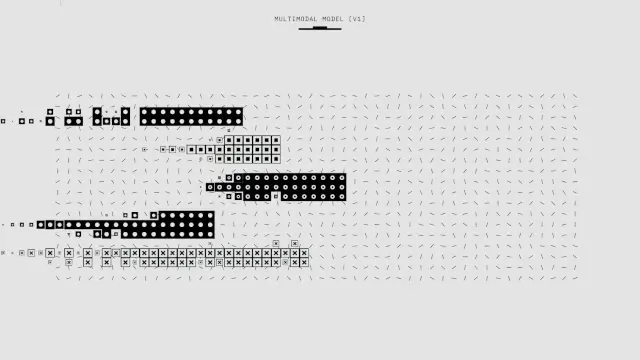
Multimodal AI systems now sit at the intersection of model design and production engineering. A text model can summarize a document, a vision model can inspect an image, and a speech model can transcribe a call. A unified system must do more. It must connect what was written, shown, heard, and observed over time without losing provenance or inventing a relationship that the input does not support.
The term also hides several different designs. Some products use a cascade of specialist models. Some attach image or audio adapters to a language core. Others train a shared model over multiple token streams and add separate components for speech or video. The OpenAI GPT-4o announcement is a useful historical reference because it describes combined text, audio, image, and video input with text, audio, and image output. [1] The architecture question is what happens between input support and reliable reasoning.
This article treats the 2026 race as a systems problem. It compares architecture patterns, temporal context, evaluation, serving, safety, and developer workflows. It does not rank vendors or claim that one model is equally strong on every modality.
What You'll Learn
- What it means for a model to unify text, vision, audio, and video
- How pipelines, adapters, shared token spaces, and expert routing differ
- Why long context and real-time interaction create separate engineering constraints
- How to evaluate multimodal systems before putting them into production workflows
What Multimodal AI Systems Actually Unify
Unification can mean at least four things. A product may accept several input types. It may map those inputs into a shared representation. It may reason across modalities in one task. It may also generate more than one output type. These capabilities are related, but they are not interchangeable.
Input support is the easiest claim to verify. A model that accepts a video file may sample frames and ignore audio. A speech interface may transcribe audio before a text model responds. A document tool may convert a page into text and images before retrieval. Each approach can be useful, but the conversion step changes what the system can see and how errors propagate.
Cross-modal reasoning is a stronger requirement. Consider a support call that includes a spoken promise, a screen recording, and a written contract. The system must align speakers, timestamps, visible actions, and contractual language. A correct answer depends on the relationship among the streams. A collection of isolated captions is not enough.
| Capability | What the user sees | Engineering question |
|---|---|---|
| Multi-input support | Text, images, audio, or video can be submitted | Are all streams processed or is one converted into text first? |
| Shared representation | Different inputs can be referenced in one prompt | How are tokens aligned and how is modality identity preserved? |
| Cross-modal reasoning | The answer depends on relationships across streams | Can the system cite the relevant frame, sound, or phrase? |
| Multi-output interaction | The model can return text, speech, or an image | Which decoder controls quality, timing, and safety? |
For readers tracking the wider infrastructure spend behind these systems, the site’s Alphabet AI capex analysis supplies market context. Its AI accounting agents analysis adds a financial-operations view of model-assisted workflows. Neither article establishes that any one vendor has solved multimodal reliability.
The Architecture Race: Pipelines, Adapters, and Shared Models
The first architecture is a cascade. Speech recognition converts audio to text, a language model reasons over the transcript, and speech synthesis produces a response. Image captioning and optical character recognition can perform the same role for visual inputs. Cascades are easy to inspect because each stage has a defined contract. They also create error boundaries and latency between stages.
The second architecture keeps a language model at the center and adds modality adapters. A vision encoder converts image patches into embeddings that the language model can consume. An audio encoder can produce speech or acoustic tokens. A video path may select frames and combine them with temporal features. This design can reuse language capabilities while requiring careful calibration at each adapter.
The third architecture trains more of the system jointly. The model may use a shared token space, cross-attention layers, or a mixture-of-experts router that sends different inputs to specialist capacity. Joint training can improve interaction across streams, but it also makes data quality, tokenization, sampling, and debugging harder to reason about.
Meta’s Llama 4 announcement provides a vendor-described example of expert routing. Meta describes Scout as a 17 billion active-parameter model with 16 experts and Maverick as a 17 billion active-parameter model with 128 experts. [2] Those figures describe the published model design. They are not proof that a sparse model will be cheaper or better in every deployment.
| Pattern | Strength | Tradeoff |
|---|---|---|
| Cascaded specialists | Clear interfaces and easier component replacement | Error propagation and added latency across stages |
| Language core with adapters | Reuses language reasoning and existing tooling | Adapter alignment can limit cross-modal fidelity |
| Joint multimodal model | One reasoning path can connect multiple streams | Training data and failures are harder to isolate |
| Mixture-of-experts routing | Specialist capacity can be activated selectively | Routing, memory, and serving behavior add operational work |
The right architecture depends on the workflow. A compliance archive may prefer a cascade with explicit transcripts and frame references. A voice assistant may require a streaming path. A design tool may value image generation and editing more than low-latency speech. “Unified” is therefore a design choice, not a single technical category.
Why Modality Alignment Matters More Than File Support
Alignment is the point where multimodal systems either create useful context or produce a confident mismatch. It has a spatial side and a temporal side. Spatial alignment connects a phrase to an object, region, diagram, or screen state. Temporal alignment connects an utterance or event to the right moment in a recording.
Video is a clear example. A system may receive a long file, sample a subset of frames, extract subtitles, and process audio. If the subtitle window does not match the sampled frame, the model can combine evidence from different moments. The final answer may look fluent while being based on a false pairing.
Google’s video understanding documentation says Gemini can describe, segment, and extract information from videos, answer questions about video content, and refer to specific timestamps. [4] That timestamp capability is important because a production answer should point reviewers to evidence instead of presenting a free-floating summary.
Alignment also matters for training. Text and images can be paired by a caption, but a caption does not describe every visual detail. Audio and video can share a clock, yet background speech can be difficult to separate from music or noise. The system needs metadata, sampling policy, and evaluation examples that test whether it used the correct stream.
A practical implementation stores each extracted event with a source URI, modality, timestamp, confidence, and transformation history. The language model can then reason over a structured evidence set. This makes it possible to distinguish a model error from an extraction error and an ingestion error.
From Voice Pipelines to Real-Time Interaction
Real-time multimodality is not just a faster version of batch inference. A live system must handle a continuous stream, partial transcripts, interruptions, turn-taking, tool calls, and output timing. It also needs a session model that knows what has been committed, what is provisional, and what can be discarded when the user changes direction.
OpenAI’s GPT-4o announcement reports audio response in as little as 232 milliseconds and an average of 320 milliseconds for the cited system. [1] The announcement also contrasts this with an older voice mode built from separate speech-to-text, text-model, and text-to-speech stages. The historical lesson is not that every unified model has the same latency. It is that each boundary in a cascade can add delay and create another synchronization problem.
Google’s Gemini Live API documentation describes continuous audio, image, and text streams, with a stateful WebSocket connection. It specifies raw 16-bit PCM audio at 16 kHz and JPEG images at no more than 1 frame per second as input examples, plus raw 16-bit PCM audio at 24 kHz as output. [5] These details show why a live multimodal product must design transport, buffering, authentication, and backpressure along with the prompt.
The same documentation lists barge-in, audio transcription, tool use, and live translation features. [5] Each feature adds state. A user interruption can invalidate a pending tool call. A tool result can arrive after the user has changed the request. A voice response may need to stop before the system has finished generating a complete text answer. These are distributed-systems problems with a model inside them.
What Open and Closed Model Strategies Signal
Model distribution changes the engineering decision. A closed API can reduce infrastructure work and expose rapid model upgrades. It can also limit control over weights, tokenizer behavior, sampling, data locality, and release timing. An open-weight model can improve deployment control, but the operator owns hardware, inference optimization, patching, evaluation, and incident response.
Meta says Llama 4 Scout and Maverick are available through llama.com and Hugging Face. [2] Meta also describes Scout as fitting on a single NVIDIA H100 GPU. [2] This is useful as a deployment example, but a model fitting on one accelerator does not define the full production footprint. Context length, concurrency, quantization, image resolution, audio duration, caching, and redundancy can change the serving plan.
Closed systems are not automatically simpler. An API call still needs request shaping, upload handling, retries, rate limits, privacy controls, observability, and a fallback path. The operator must understand which modalities are supported in the chosen model, which inputs are sampled, how long files are retained, and how output safety is enforced.
Open and closed systems can also be combined. A local model can handle redaction, classification, or routing before a hosted model performs a harder reasoning task. The boundary should be based on data sensitivity and measurable quality, not on a generic preference for one distribution model.
The site’s Bittensor roadmap analysis offers adjacent context on distributed AI infrastructure. The site’s stablecoin infrastructure coverage shows a different production context for data and settlement systems. The comparison is useful only at the systems level. A network for model services and an application that serves multimodal inference have different control and reliability requirements.
Long Context Does Not Equal Long-Video Understanding
Long context can hold more tokens, frames, audio segments, or retrieved events. It does not guarantee that the model will sample the right evidence, preserve temporal order, or reason evenly across the entire input. The application still needs an ingestion policy that controls resolution, frame rate, chunking, overlap, and retrieval.
The official Video-MME project describes 900 videos with 254 total hours and 2,700 human-annotated question-answer pairs. It spans six primary visual domains and 30 subfields, includes videos from 11 seconds to 1 hour, and combines video frames with subtitles and audio. [8] The project reports that model performance declines as video duration increases in its experiments.
That result changes how a team should read a context-window claim. A 10 million-token window or a 256k context length may support larger inputs, but the application still needs to decide which information receives attention. It may also need a second pass that retrieves relevant timestamps instead of asking one call to inspect every frame equally.
Google’s video documentation recommends the File API for files larger than 100 MB or long videos of 10 minutes or more. It lists a 20 GB maximum for paid use and 2 GB for free use on that page. [4] These limits are API-specific and can change. They are still a useful reminder that context is bounded by upload, processing, storage, and billing constraints as well as model memory.
| Long-video control | What it protects | What to record |
|---|---|---|
| Frame sampling policy | Coverage and inference cost | Frame rate, maximum frames, resolution, and dropped segments |
| Audio and subtitle alignment | Evidence from the correct moment | Stream IDs, timestamps, offsets, and extraction status |
| Hierarchical retrieval | Reasoning over long recordings | Chunk summaries, source spans, and retrieval scores |
| Answer grounding | Reviewability and correction | Referenced frames, timestamps, transcript spans, and uncertainty |
For implementation, treat the original media as the source of record. Derived frames, transcripts, captions, and embeddings should be reproducible artifacts. If the answer changes after a model update, the team should be able to determine whether the cause was a new model, a new sampler, a new transcription, or a changed retrieval policy.
How to Evaluate Cross-Modal Reasoning
A single multimodal score is not enough for a production decision. The benchmark survey by Li and colleagues reviews 200 benchmarks and evaluations across perception and understanding, cognition and reasoning, specific domains, key capabilities, and other modalities. [7] Its structure supports a simple rule: test the capability that the product needs, then test the interactions that can cause harm.
Start with isolated modality tests. Measure text reasoning, image grounding, speech recognition, audio event recognition, and video question answering separately. Then add paired tests. Ask whether a spoken instruction matches a visible action. Ask whether an invoice total agrees with the image and the extracted text. Ask whether the system can point to the timestamp that supports its answer.
Next, test conflict and omission. Put different facts in the audio and subtitles. Remove a key frame. Add irrelevant speech. Change the order of events. These cases expose whether the model follows the correct evidence path or simply selects the most familiar textual pattern.
Video-MME reports that subtitles and audio can improve video understanding in its experiments. [8] That does not mean extra modalities always improve accuracy. Additional streams can also create contradictions, privacy exposure, and more opportunities for prompt injection. The evaluation must measure both gains and failure modes.
| Test layer | Example question | Release gate |
|---|---|---|
| Single modality | Can the model transcribe and classify the target stream? | Minimum task score and error taxonomy |
| Cross-modal alignment | Does the answer connect the correct frame, phrase, and timestamp? | Evidence reference is present and correct |
| Conflict handling | Does the system flag disagreement between streams? | No silent selection of unsupported evidence |
| Operational behavior | Does the workflow recover from timeout or partial output? | Idempotent retry and complete audit record |
Vendor benchmark claims need matched settings. Anthropic’s Claude 4 page reports MMMU results and notes when extended thinking was used. [3] Comparing those numbers with another vendor’s default setting can produce a false ranking. Record model version, prompt, input resolution, context, reasoning mode, tools, sampling policy, and scoring method with every result.
Serving Multimodal Models in Production
Serving a multimodal model is a resource scheduling problem. Text tokens, image patches, audio tokens, and video frames have different sizes and processing patterns. A request with one sentence and a request with a long recording should not be placed in the same queue without accounting for their expected work.
The serving layer should separate upload, preprocessing, inference, tool execution, and postprocessing. Each stage needs a timeout and a bounded retry policy. Large files should be referenced by an object identifier rather than copied through every internal service. Derived artifacts should have retention rules because transcripts and screenshots can contain sensitive information.
Mixture-of-experts designs can reduce active computation for a request, but routing does not eliminate memory or network costs. A live model may need multiple components for encoding, reasoning, speech output, and session state. A batch video job can trade latency for throughput. A voice agent cannot make the same trade without changing the user experience.
Observe more than tokens per second. Track time to first audio, time to first text, time to final answer, frame sampling delay, upload processing time, tool wait time, queue time, and retry rate. Track quality against these measurements so that a latency improvement is not mistaken for a product improvement when it removes useful evidence.
The site’s AI infrastructure coverage can help readers connect model demand with hardware planning. For a production team, the actionable question is narrower. Which workload needs local control, which workload can use a hosted endpoint, and which workload should remain a human-reviewed batch job?
Safety Controls for Cross-Modal Inputs
Safety filters designed for text alone do not cover every multimodal path. An instruction can be placed in an image, spoken in an audio clip, hidden in a document, or embedded in a video frame. The system must inspect each input path before it reaches tools or an irreversible action.
Cross-modal safety also includes evidence integrity. A screenshot can be edited. A transcript can omit a speaker. A video can contain a prompt intended for the model rather than the user. The application should label extracted text and model-generated summaries as derived content. A tool should not treat them as authority without a policy check.
Claude 4’s announcement describes extensive testing and safety measures, while Meta’s Llama 4 page describes systematic testing, adversarial probing, and automated and manual red teaming. [2] [3] These statements describe vendor processes. A deploying organization still needs its own tests against its data, tools, user roles, and escalation paths.
Minimum controls include modality-aware input scanning, explicit tool permissions, isolated file handling, signed or scoped user intent, human review for high-impact actions, and a kill switch for repeated failures. Store the source span that caused an action and the policy result that allowed it. If the evidence cannot be reconstructed, the system is difficult to audit.
Where Developer Tools Fit
Multimodal systems are becoming developer platforms. Claude 4 lists code execution, an MCP connector, a Files API, and prompt caching as API capabilities for agent workflows. [3] Google’s Live API lists function calling and Google Search as tool integrations. [5] These features can shorten the path from perception to action, but they also widen the control surface.
Tool use should be typed and bounded. A model should receive a schema, allowed values, authentication context, and an explicit result format. The application should validate the arguments before execution and validate the result before it enters the next step. A tool call that came from an image or audio instruction should not receive broader authority than a call that came from typed user input.
Files require the same care. Store the original file, its hash, extraction settings, and access decision. Keep prompts and outputs linked to the file version. Delete derived artifacts on the same schedule as the source when policy requires it. These details matter more than a polished demo because production failures often occur at the boundary between an input store and a tool.
Developers should also keep a fallback path. If audio extraction fails, the system can request a transcript or route to a human. If a video is too long, it can ask for a time range or use a retrieval pass. A fallback is not a sign that the model is weak. It is an expected part of a system that accepts uncertain inputs.
What a Sensible 2026 Adoption Plan Looks Like
Start with one workflow where multimodal evidence is necessary and the outcome can be reviewed. Good candidates include document intake, call quality review, visual inspection, video search, and accessibility support. Define the source streams, the expected answer, the allowed tools, the failure response, and the human owner.
Run an offline evaluation before live traffic. Use representative files, edge cases, contradictory inputs, and long examples. Freeze the sampling and scoring policy. Store failure examples rather than only an aggregate score. The objective is to learn which modality or stage creates errors.
Move to shadow mode next. Let the system process real inputs without changing the official decision. Compare its evidence, timing, and proposed action with the existing workflow. This reveals data quality and integration issues that are absent from a clean benchmark.
Only then allow bounded actions. Start with reversible operations, low-risk tool calls, and clear escalation. Keep a switch that routes every case to review. Expand authority only when the team has evidence about false positives, false negatives, latency, cost, and incident recovery.
For a broader view of how AI spending and product adoption interact, see the site’s Big Tech investment coverage and banking and markets coverage. The adoption decision remains specific to the workflow, data, and control boundary.
What the Research Says About the Race
The research supports a more careful conclusion than a simple vendor leaderboard. OpenAI shows the appeal of low-latency interaction across audio, vision, and text. Meta shows how open distribution and expert routing can shape deployment. Anthropic shows how reasoning, tools, files, and agents turn a model into a workflow surface. Google documents the transport and file-handling details needed for video and live interaction. Qwen’s technical report shows how newer omni-modal designs combine long context, audio-visual training, expert routing, and speech generation.
Those examples point to different forms of unification. A system can unify input handling while keeping specialist encoders. It can unify reasoning while using separate decoders. It can unify a session while routing each request to different experts. The user may experience one assistant, but the operator still needs to understand the internal boundaries.
The benchmark evidence adds a limit. The survey covers many evaluation dimensions rather than one universal test. Video-MME includes audio, subtitles, varied duration, and human annotations, and reports lower performance as videos get longer. [7] [8] The implication is practical. A long context window is a resource. It is not a guarantee of memory, temporal grounding, or correct cross-modal inference.
In 2026, the strongest engineering teams will judge multimodal systems by evidence quality. They will ask which stream supports an answer, how the system handles disagreement, whether a tool call is authorized, how latency changes with media size, and whether the same request can be replayed safely. That standard is less dramatic than a model leaderboard, but it is more useful for production.
Readers can compare this technical framing with the site’s decentralized AI coverage and AI market coverage. The common thread is that infrastructure claims need an operating model, not only a headline capability.
The race to unify text, vision, audio, and video is therefore a race to make the boundaries reliable. A model that accepts every modality but cannot align evidence is a file gateway. A model that reasons across streams but cannot expose sources is hard to govern. A model that answers quickly but cannot recover from partial failure is not ready for important workflows.
The next step for a development team is concrete. Pick one multimodal task, define the evidence contract, capture the source and transformation history, measure each stage, and test failure before expanding authority. That is how teams can benefit from multimodal AI systems without confusing a unified interface with a unified guarantee.
Frequently Asked Questions

SK Jabedul Haque
Building India's most trusted finance education platform — simplifying news, schemes and market trends so anyone can understand and invest confidently.
Read full bio

Never miss an update
Get our clearest explainers on schemes, markets and money — read what matters, without the noise.
Explore more articles