
What You'll Learn
- The fundamental difference between e-Rupee and UPI in 2026.
- How to use Offline Mode to pay even when you have no network.
- Step-by-step guide to downloading and loading your first CBDC wallet.
- List of 19+ banks offering official Digital Rupee apps in India today.
India's payment revolution has reached a new milestone in 2026 with the mass expansion of the Reserve Bank of India (RBI) Digital Rupee (e₹). While UPI transformed how we move money, the Digital Rupee is transforming the money itself. As a Central Bank Digital Currency (CBDC), the e-Rupee is the digital equivalent of the paper notes in your pocket, backed directly by the RBI. With the recent introduction of advanced features like offline transacting and purpose-linked programmability, the e-Rupee is no longer just a pilot project—it is becoming a primary pillar of India's digital economy.
What is RBI Digital Rupee (e₹)? The CBDC Explained
The Digital Rupee, or e₹, is a tokenized version of the Indian Rupee. Unlike "digital money" seen in your bank balance, which is a liability of your commercial bank, the e-Rupee is a liability of the Reserve Bank of India. This means it carries the same trust and safety as physical cash. In 2026, the retail version (e₹-R) is available to all citizens through specialized wallet apps. It is issued in the same denominations as our physical coins and notes (e.g., ₹2, ₹5, ₹10, ₹20, ₹50, ₹100, ₹200, ₹500, and even ₹2000 digital tokens).
e-Rupee vs UPI: Key Differences You Must Know
Many users confuse e-Rupee with UPI because both use QR codes. However, the underlying technology is completely different. UPI is a payment instruction (move money from Bank A to Bank B), while e-Rupee is the settlement of value (the token itself is the money). This is part of the broader technological shift we are seeing in India's digital infrastructure.
| Feature | UPI (Unified Payments Interface) | Digital Rupee (e₹) |
|---|---|---|
| Nature | Account-to-account transfer | Token-based digital cash |
| Liability | Commercial Bank | Reserve Bank of India (RBI) |
| Offline Use | Limited (requires USSD) | Full Native Offline Support |
| Intermediary | Requires clearing between banks | Instant settlement (like cash) |
New Features in 2026: Offline Payments & Programmable Cash
The 2026 update to the CBDC pilot brought two revolutionary features that set it apart from any other payment method:
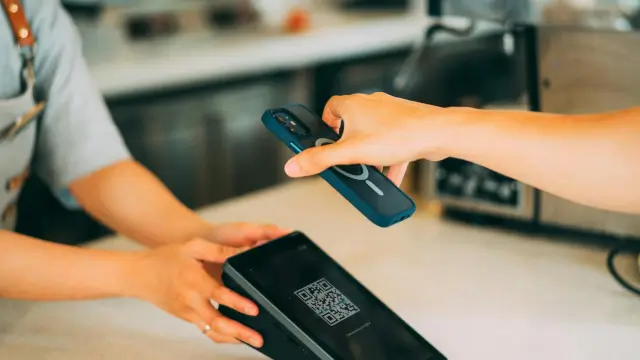
- Offline Mode: Using Near-Field Communication (NFC), users can now transfer e-Rupee tokens between two phones without any internet connection. This is a game-changer for rural areas or crowded underground metros where network signals are weak.
- Programmability: The RBI now allows the "programming" of digital tokens. For example, a parent can send e-Rupee to a child that can only be spent at school canteens, or the government can issue PM POSHAN subsidies that can only be used to buy groceries.
Best AI Models 2026: How Artificial Intelligence is Managing India's Digital Payments
How to Use the e-Rupee Wallet: A Step-by-Step Guide
Setting up your Digital Rupee wallet in 2026 is faster than ever due to NPCI integration:
- Download the App: Search for "Digital Rupee" in the Play Store or App Store. Look for the app provided by your primary bank (e.g., SBI Digital Rupee, ICICI Digital Rupee).
- Register: Verify your mobile number linked to your bank account. The app will automatically detect your Aadhaar-linked records.
- Load Wallet: Transfer money from your linked bank account into the wallet. You will see digital tokens appear in your "purse."
- Pay: Scan any merchant QR code (even standard UPI QR codes) and enter your 6-digit wallet PIN to complete the transaction.
Participating Banks: Where to Download the CBDC App
As of May 2026, 19 major banks are live on the RBI CBDC network. These include public sector giants like SBI, PNB, and Bank of Baroda, as well as private leaders like HDFC, ICICI, Axis, and IDFC First Bank. Interestingly, third-party apps like CRED and MobiKwik have also received RBI approval to offer e-Rupee wallets, making the ecosystem highly competitive.
Benefits of Digital Rupee for Retail Users and Merchants
For users, the primary benefit is privacy. Unlike bank transfers that leave a detailed trail in your monthly statement, small-value e-Rupee transactions provide a degree of anonymity similar to physical cash. For merchants, the Digital Rupee offers instant settlement. While UPI transactions can sometimes stay "pending" for minutes or hours due to bank server issues, e-Rupee transfers are atomic and final the moment the token moves.
Privacy and Security: Is the Digital Rupee Safe?
One of the top concerns for users in 2026 is security. The RBI has implemented a robust cyber-security framework where your e₹ tokens are encrypted. Even if you lose your phone, your "cash" remains safe because it is tied to your Aadhaar-authenticated digital identity. The tokens are recovered as soon as you log into your wallet on a new device. This is a significant upgrade over physical cash, which is lost forever if your wallet is stolen.
Conclusion: The Future of Money in India
The RBI Digital Rupee is not meant to replace UPI; it is meant to complement it. While UPI is perfect for account-based transfers, the e-Rupee is the perfect replacement for physical cash. By 2030, the RBI envisions a "cashless society" where physical note printing is minimized, and every Indian has an e-Rupee wallet as their primary tool for daily transactions. As you navigate the 2026 economy, getting comfortable with CBDC is your first step into the future of global finance.
Last Updated: May 25, 2026 | Source: Reserve Bank of India (RBI) and National Payments Corporation of India (NPCI) Official Portals