
What You'll Learn
- Why 2026 is the breakthrough year for AI–quantum convergence
- Key market projections and government investments driving the sector
- Real-world applications in drug discovery, finance, logistics, and cybersecurity
- The major players — Google, IBM, NVIDIA, Microsoft — and their strategies
What Is AI–Quantum Convergence?
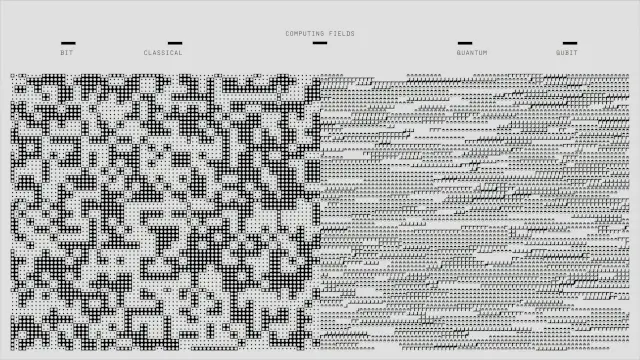
AI–quantum convergence refers to the integration of artificial intelligence with quantum computing to create systems that are exponentially more powerful than either technology alone. On one side, quantum computing uses qubits, superposition, and entanglement to solve problems that classical computers find intractable. On the other, AI provides the intelligence layer — optimizing quantum operations, reducing errors, and interpreting quantum outputs for practical use.
Quantum computing market size stood at $1.53 billion in 2025 and is projected to reach $18.33–$19.44 billion by 2034–2035, growing at a CAGR of 29.73%–31.6% (Fortune Business Insights, Precedence Research). When you layer AI into that equation — through Quantum Machine Learning (QML) and hybrid quantum-classical systems — the addressable market expands dramatically. According to Gartner, agentic AI spending alone is projected to reach $201.9 billion in 2026, and quantum computing AI applications are growing at a 50% CAGR through 2030.
The term “convergence” is not academic speculation. In 2026, hybrid quantum-classical computing became the dominant architecture, where classical processors handle routine operations while quantum processors accelerate AI model training, particularly for scenarios with limited datasets or high computational complexity. Pasqal CEO Loïc Henriet told The Washington Post: “The first real signs of quantum advantage could appear as early as 2026.”
Market Growth and Government Investment in 2026
The numbers paint a clear picture. The global quantum computing market is valued at $1.88 billion in 2026 and is expected to hit $19.44 billion by 2035 (Precedence Research). Fortune Business Insights projects a slightly higher trajectory, estimating $2.04 billion in 2026 growing to $18.33 billion by 2034 at a CAGR of 31.6%. North America dominated with a 43.6% market share in 2025, while the next-generation computing market is expected to see quantum computing capture 36.6% of the segment in 2026.
The most significant news came in May 2026 when the U.S. government announced a $2 billion investment in quantum computing firms and foundries (WSJ, May 22, 2026). GlobalFoundries and IBM will receive funding to establish two new quantum device foundry units, with the government taking equity stakes in recipient companies. This injection of public capital signals that quantum computing is no longer experimental — it’s a strategic national priority.
Startup funding is equally aggressive. SandboxAQ, spun out of Alphabet in 2022, closed a $450 million Series E in April 2025, bringing total capital raised to over $950 million. Sygaldry raised $139 million in May 2026 specifically to build quantum computers optimized for AI workloads. McKinsey’s 2026 Quantum Technology Monitor confirms the market is moving rapidly from experimentation to commercialization, with over 300 global companies actively adopting quantum technology.
Meanwhile, the AI side continues its explosive growth. Gartner reports that spending on agentic AI will hit $201.9 billion in 2026, overtaking chatbot spending by 2027. The convergence of these two massive spending curves creates what analysts are calling the “AI–Quantum Supercycle” — a virtuous cycle where AI accelerates quantum development and quantum unlocks new AI capabilities.
Breakthrough Research: AI Accelerating Quantum, Quantum Supercharging AI
2026 has been a landmark year for breakthrough research at the AI–quantum intersection. Here are the most significant developments:
NVIDIA Launches Ising — First Open AI Models for Quantum (April 2026): NVIDIA unveiled Ising, the world’s first open-source AI models designed to accelerate the path to useful quantum computers. These models create AI-powered workflows for building fault-tolerant quantum systems, dramatically reducing the time needed to develop error-corrected quantum processors (NVIDIA Newsroom, April 14, 2026).
AI Decoder Cuts Quantum Errors by 17x (April 2026): Researchers demonstrated that AI-based decoders can reduce quantum computing errors by up to 17 times compared to traditional methods. This breakthrough addresses the single biggest obstacle to practical quantum computing — qubit instability and error rates (The Quantum Insider, April 11, 2026).
Study Finds Exponential Quantum Advantage in ML (April 2026): A groundbreaking study published through multiple academic channels found exponential quantum advantage in machine learning tasks, proving that quantum computers can solve specific ML problems that are fundamentally intractable for classical systems (The Quantum Insider, April 10, 2026).
AI Automates Quantum Dot Tuning (April 2026): Researchers at Phys.org reported that AI now automates quantum dot voltage tuning, a critical step for scaling up quantum computing. This eliminates a manual, time-intensive process that was a major bottleneck in quantum chip manufacturing (Phys.org, April 23, 2026).
Cleveland Clinic, RIKEN, and IBM Model 12,635-Atom Protein (May 5, 2026): In the largest known quantum simulation of a biological molecule, a team modeled a 12,635-atom protein, demonstrating that quantum computers can now tackle biologically meaningful problems. This is a watershed moment for quantum AI in drug discovery (IBM Newsroom, May 5, 2026).
Real-World Applications: Where AI–Quantum Convergence Is Delivering Results
The convergence is not theoretical. Across industries, real applications are emerging:
Healthcare and Drug Discovery: Quantum AI simulates molecular behavior to expedite drug development and create customized treatment strategies. Google launched ReplIQ, a quantum computing and AI initiative specifically for life sciences (Google Blog, May 11, 2026). D-Wave Quantum runs a Quantum AI Project for drug discovery targeting first-in-class small molecules. The IBM–Cleveland Clinic–RIKEN protein simulation proves that quantum computers can model biologically relevant systems today (IBM Newsroom, May 5, 2026).
Finance and Risk Modeling: Banks and asset managers are piloting quantum tools for risk modeling, option pricing, and portfolio optimization. Quantum AI enables real-time analysis of vast transaction datasets and enhances fraud prevention. Predictive models improved by quantum analysis allow investment professionals to make better decisions (USDSI, 2026). Santander launched a global challenge in May 2026 seeking companies with the best quantum computing and AI solutions for financial services (Santander Press, May 11, 2026).
Logistics and Supply Chain: D-Wave’s quantum computers help optimize routing, scheduling, and supply chain efficiency for companies like BASF and SAP. Quantum optimization demonstrably improves real-world logistics decision-making in telecom, energy, and manufacturing sectors (D-Wave Featured Applications, 2026).
Cybersecurity: The push for quantum-safe encryption is driving urgent adoption. AI is accelerating the quantum threat to current cryptographic standards, as security experts at CoinDesk warned in May 2026. Meanwhile, researchers at Florida International University developed new encryption methods to protect against quantum computer hacks (FIU News, March 2026). The U.S. Department of Energy announced the “Genesis Mission” which includes a goal to accelerate quantum advantage via AI (Quantum Computing Report, March 19, 2026).
Energy and Climate: Utilities and renewables firms are testing quantum models for grid balancing and battery design. Quantum-informed AI improved long-term turbulence forecasts while using far less memory (Phys.org, April 17, 2026). The S&P analysts reported in April 2026 that quantum computing is arriving just as the energy sector prepares for a compute-driven future (The Quantum Insider, April 7, 2026).
| Application Area | Key Players | Timeline to Impact |
|---|---|---|
| Drug Discovery | IBM, Google, D-Wave, Cleveland Clinic | 5–10 years |
| Financial Optimization | Santander, JPMorgan, Rigetti | 5–15 years |
| Logistics Optimization | D-Wave, BASF, SAP | 5–15 years |
| Materials Science | IBM, SandboxAQ, NVIDIA | 5–10 years |
| Quantum-Safe Crypto | IBM, Google, FIU, DHS | Now–5 years |
| AI/ML Acceleration | NVIDIA, Google, IBM, Pasqal | 10–20 years |
Major Companies Driving the AI–Quantum Convergence
The convergence is being driven by both tech giants and specialized startups. Here’s how the major players are positioning themselves in 2026:
IBM is arguably the most aggressive in quantum AI. In 2026 alone, IBM released a quantum-centric supercomputing reference architecture, partnered with ETH Zurich for next-gen quantum AI algorithms, teamed with Dallara for quantum-powered automotive design, launched a joint research lab with MIT, and committed to adding 750 quantum and AI jobs in Chicago. IBM’s Quantum Network now includes over 200 enterprise and research partners (IBM Newsroom, 2026).
Google launched ReplIQ for quantum life sciences, published research on neutral atom quantum computers, and announced quantum vulnerability disclosures for cryptocurrency. Google’s TensorFlow Quantum continues to be the leading framework for hybrid quantum-classical machine learning (Google Blog, 2026).
Agentic AI in 2026: How Autonomous Super Agents Are Transforming Enterprise Workflows
NVIDIA fundamentally changed the quantum landscape with the launch of Ising, its open AI models for quantum computing. The NVIDIA Accelerated Quantum Research Center in Boston aims to integrate quantum processors with AI-based supercomputing, directly addressing the most significant challenges in quantum computing hardware (Forbes, March 2026; NVIDIA Newsroom, April 2026).
Microsoft is investing heavily in topological qubits and quantum networking. Intel, behind in AI chips, is betting on quantum and neuromorphic processors as its next growth vector (Network World, May 6, 2026). Startups like Rigetti, IonQ, D-Wave, and Sygaldry are also critical players, with quantum stocks seeing a major rally in April 2026 following NVIDIA’s Ising announcement.
Challenges and the Road Ahead
Despite the rapid progress, significant challenges remain. Qubit count and error rates continue to limit practical applications. The Quantum Insider’s 2026 use-case analysis confirms that drug discovery and materials science applications are 5–10 years from mainstream deployment, while AI/ML acceleration is 10–20 years out (The Quantum Insider, May 4, 2026).
Enterprise readiness is another concern. An IBM study found that while quantum computing is coming, most enterprises aren’t ready (The Quantum Insider, January 20, 2026). Only 23% of organizations have scaled AI deployments (McKinsey), and 40% of enterprise AI projects face cancellation by 2027 (Gartner). Adding quantum complexity only widens the readiness gap.
The quantum threat to cryptography is accelerating. CoinDesk reported on May 24, 2026 that AI is speeding up the quantum threat to cryptocurrency. Three papers published in three months are rewriting the quantum threat timeline, bringing Q-Day (the day quantum computers break current encryption) closer than previously estimated (The Quantum Insider, March 31, 2026).
Conclusion: Why 2026 Matters
2026 is not just another year of incremental progress. It is the year AI and quantum computing stopped being separate conversations and became a single narrative. The $2 billion U.S. government investment, NVIDIA’s Ising models, IBM’s protein simulation, and the growing list of enterprise deployments all point to the same conclusion: the AI–quantum convergence is real, it is accelerating, and it will fundamentally reshape how we solve the world’s hardest problems.
For businesses, the message is clear. The time to prepare is now. Early movers building quantum AI literacy and experimenting with hybrid quantum-classical systems today will be the ones who capture the value when the technology matures. As McKinsey’s 2026 Quantum Technology Monitor confirms, the market has moved past experimentation — commercialization has begun.
Last Updated: May 25, 2026 | Source: IBM Newsroom, NVIDIA Newsroom, Google Blog, McKinsey, Precedence Research, Fortune Business Insights, The Quantum Insider, Forbes, WSJ (Official Websites)