
What You'll Learn
- Brutally honest analysis of SEBI's F&O loss report and the '9 out of 10' trader failure rate
- Why Sensex is projected to reach 95,000 by Dec 2026 and how to position your portfolio
- How AI and HFT algorithms are outperforming retail traders and what you can do
- A step-by-step wealth creation blueprint using behavioral finance and Nifty data
The Share Market Truth 2026 is not what you see on social media reels. It is not about 'Lamborghinis' and 'Easy ₹50k daily'. As of May 25, 2026, the Indian stock market has reached a critical juncture. While global institutions like Morgan Stanley are calling for a massive bull run toward 95,000 on the Sensex, the ground reality for the average Indian retailer is starkly different. We are witnessing a massive transfer of wealth from the uneducated masses to the highly sophisticated, AI-driven institutions. This master guide is a raw reality check for every Indian investor who wants to understand how money is actually made, why the 'trading dream' is a mathematical nightmare, and how to build a bulletproof portfolio for the next decade.
The 2026 Reality: Why 90% of Retailers Still Lose Money
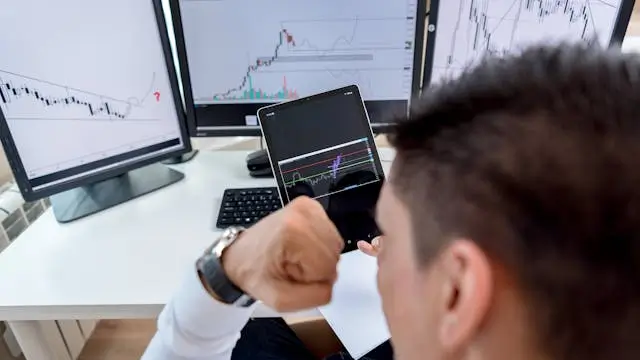
In 2026, retail investors hold a record ₹41 lakh crore worth of Indian stocks—nearly 10% of the total market cap. Yet, the failure rate in active trading has never been higher. According to recent SEBI studies, approximately 9 out of 10 individual traders in the equity F&O (Futures & Options) segment incur net losses. The reason is simple: Overconfidence. Investors tend to overestimate their knowledge and control over market outcomes. In a market dominated by High-Frequency Trading (HFT) bots that react in microseconds, a human clicking a button on a mobile app stands almost zero chance of winning a speed-based game. Real success in 2026 is about 'Out-waiting' the market, not 'Out-smarting' it.
Market Outlook: Sensex 95,000 and the Next Big Bull Run
The macro-economic data for India is exceptionally strong. Morgan Stanley predicts the Sensex will reach 95,000 by December 2026, with a bull-case target of 107,000. This optimism is driven by macro stability, policy reforms, and consistent corporate earnings growth. India is expected to drive 20% of global growth in the coming decade. However, the 'Truth' is that a rising market does not mean every investor will make money. During the recent 12% correction from the peak, many retailers sold their quality holdings in panic, only to watch the market rebound. The bull run of 2026 will be selective; money will flow to sectors with genuine cash flows (Banking, Infrastructure, Green Energy) rather than just 'story-based' penny stocks.
The F&O Trap: Analyzing SEBI’s $21.6 Billion Warning
The most brutal part of the Share Market Truth 2026 is the data on derivative trading. Over 11 million retail investors have lost a staggering $21.6 billion (approx ₹1.8 lakh crore) in the last trading cycle. F&O is designed as a risk-hedging tool for large portfolios, but in India, it is being used as a gambling instrument by beginners. The 'lottery ticket' mindset leads to people buying out-of-the-money (OTM) options that expire worthless 99% of the time. SEBI has introduced stricter protection norms in 2026 to curb this 'F&O addiction', but the ultimate protection is investor education. You are not trading against other people; you are trading against algorithms that don't sleep, don't feel fear, and have infinite capital.
| Strategy | Win Rate (Retail) | Expected Outcome |
|---|---|---|
| Long-term Investing (SIP) | ~85% (5+ years) | Wealth Compounding |
| Swing Trading | ~15-20% | Moderate Profits/Loss |
| F&O Intraday Trading | ~1-2% | Capital Erosion |
Psychology vs Math: Common Behavioral Biases
Wealth in India is not lost due to lack of math, but due to lack of psychological control. Behavioral finance identifies several biases that kill retail portfolios in 2026:
- Herding: Buying a stock just because it's trending on Twitter (X) or Telegram. By the time it reaches you, the 'Smart Money' is already exiting.
- Loss Aversion: Holding on to a losing stock for years hoping it will break even, while selling winners too early.
- Recency Bias: Believing the market will keep going up just because it went up last month.
Wealth Creation Blueprint: Nifty 50 vs Trading
The 'boring' truth is that Nifty 50 has delivered a 15.1% 5-year CAGR. If you simply invested in an index fund or a quality SIP, you would have outperformed 95% of active traders. In 2026, wealth creation is about identifying 'Real' blue chips—companies with debt-to-equity under 1, consistent ROE above 15%, and durable competitive moats. Companies like Tata Motors (with its hydrogen pivot) or Tata Capital (with its financial stability) are examples of fundamental plays that offer far better risk-adjusted returns than any 'hero-zero' option trade.
The Impact of AI: How Algorithmic Bots Rule the 2026 Market
AI has changed the market structure. Algorithmic trading now accounts for nearly 70% of the volume in India. These bots are programmed to hunt for retail stop-losses and exploit 'technical patterns' that beginners learn from basic YouTube videos. If you are using a standard 'RSI' or 'MACD' strategy, the bots already know your move before you make it. The only way for a retail investor to beat an AI bot is to change the time horizon. Bots can't predict where a company like HDFC Bank will be in 10 years, but they can definitely predict where it will be in the next 10 seconds.
Conclusion: Building a Bulletproof Portfolio
The Share Market Truth 2026 is that wealth is built in silence and lost in noise. While the market gears up for the 95,000-100,000 milestone, your job is to remain disciplined. Stop chasing the 'next big thing' and start investing in the 'current big things' that have proven business models. Use the SEBI warnings as a shield, not as a discouragement. The Indian economy is on a multi-decade growth path, and the stock market is the best vehicle to participate in it—provided you don't jump out of the vehicle while it's moving. Invest for the long term, ignore the intraday fluctuations, and let compounding do the heavy lifting for you.
Last Updated: May 25, 2026 | Source: SEBI Retail Participation Report, Morgan Stanley India Strategy, and Nifty 50 Historical Data