
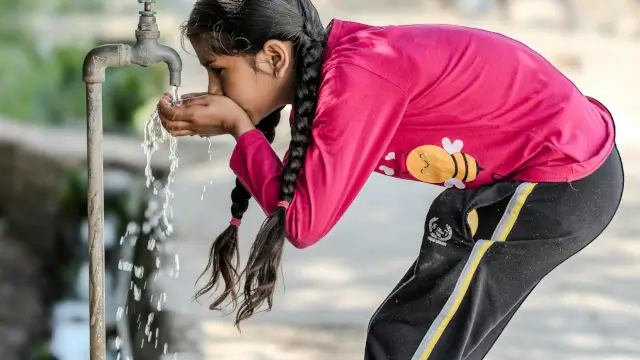
jaljeevanmission.gov.in.What You'll Learn
- Latest JJM progress: 15.83 crore rural households now have tap water — state-wise coverage details.
- Jal Jeevan Mission extension to December 2028 with ₹8.69 lakh crore outlay and JJM 2.0 reforms.
- How to apply for a 'Har Ghar Jal' tap connection through your Gram Panchayat or VWSC.
- Water quality testing: 24.80 lakh women trained, 2,163 labs set up, arsenic/fluoride habitations reduced by 97%.
- Grey water management rules: mandatory soak pits, magic pits, and rainwater harvesting under JJM 2.0.
Jal Jeevan Mission 2026: 15.83 Crore Rural Households Get Tap Water
The Jal Jeevan Mission (JJM), launched in August 2019 by the Ministry of Jal Shakti, is India's flagship programme to provide Functional Household Tap Connections (FHTC) to every rural household. It is one of the largest rural drinking water programmes in the world, aiming to deliver 55 litres of safe drinking water per person per day.
As of May 2026, the mission has transformed rural India. Starting from a baseline of just 3.24 crore households (16.71%) with tap water in 2019, JJM has surged coverage to over 15.83 crore households, representing 81.61% of rural India. This means in just six years, more than 12.5 crore additional households have gained access to safe tap water — an average of over 2 crore new connections every year.
Several states have achieved 100% saturation, including Goa, Telangana, Haryana, Gujarat, Andhra Pradesh, Punjab, Himachal Pradesh, and Puducherry. The mission has also led to the certification of 185+ districts as 'Har Ghar Jal' certified, meaning every household in these districts has a functional tap connection.
Jal Jeevan Mission 2.0: Extension Till December 2028 with ₹8.69 Lakh Crore
On March 10, 2026, the Union Cabinet approved a landmark restructuring and extension of the Jal Jeevan Mission up to December 2028. This decision, announced by Union Minister Ashwini Vaishnaw, came with a significantly enhanced total outlay of ₹8.69 lakh crore.
The restructured mission — now called JJM 2.0 — shifts focus from pure infrastructure expansion to long-term service delivery and source sustainability. The operational guidelines for JJM 2.0 were released on March 22, 2026 (World Water Day).
Key features of JJM 2.0 include:
- Structural reforms: States must sign reform-linked MoUs with the central government to receive funds. States like Uttar Pradesh, Maharashtra, Rajasthan, Madhya Pradesh, and Odisha have already signed these MoUs and received funding for FY 2025-26.
- 15-day continuous water supply demonstration: States must demonstrate 15 days of uninterrupted water supply before additional funds are released.
- Digital mapping: All assets created under JJM will be digitally mapped using geo-tagging for transparency and maintenance tracking.
- Focus on quality: Enhanced emphasis on water quality monitoring, grey water management, and groundwater recharge.
- Village-level sustainability: Every village must implement grey water management systems and develop local water security plans.
Jal Jeevan Mission Budget 2026-27: ₹67,670 Crore Allocation
The Union Budget 2026-27 allocated ₹67,670 crore to the Jal Jeevan Mission, nearly four times the revised estimate of the previous year. This is a strong signal of the government's commitment to achieving universal rural tap water coverage. The total Ministry of Jal Shakti allocation for 2026-27 stands at ₹94,808 crore.
For comparison, the JJM budget allocation has seen significant growth:
| Financial Year | Budget Allocation | Change |
|---|---|---|
| 2025-26 (RE) | ~₹17,000 crore | — |
| 2026-27 (BE) | ₹67,670 crore | ~4x increase |
How to Apply for Har Ghar Jal Tap Water Connection
Getting a tap water connection under the Jal Jeevan Mission is a straightforward process managed through local governance institutions. Here is the complete step-by-step guide:
Step 1: Contact Your Gram Panchayat or VWSC
Visit your local Gram Panchayat office or approach the Village Water and Sanitation Committee (VWSC) or Pani Samiti. These local bodies are responsible for implementing JJM at the village level. They maintain the list of households without tap connections and prioritize coverage based on need.
Step 2: Submit Application
Fill out the application form for a new tap connection. You will need to provide: household head name, Aadhaar number, address details, family size, and existing water source information. The application is typically free of cost — no payment is required for the connection itself.
Step 3: Technical Feasibility Assessment
The VWSC or state Public Health Engineering Department (PHED) team will conduct a technical survey to assess the feasibility of providing a tap connection to your household. This includes checking the proximity to the village water supply network, water source availability, and pipeline routing.
Step 4: Installation and Commissioning
Once approved, the department installs the tap connection including pipeline, tap stand, and metering (where applicable). The entire cost is borne under JJM funds. After installation, the water quality is tested using Field Testing Kits (FTKs) by trained women volunteers.
Step 5: Certification
After the tap connection is functional and water quality is verified, the household is registered in the JJM-IMIS (Integrated Management Information System) portal. The village moves closer to 'Har Ghar Jal' certification when all households are covered.
Jal Jeevan Mission Water Quality: 24.80 Lakh Women Trained
Water quality monitoring is a cornerstone of JJM's community-led approach. As of March 2026, over 24.80 lakh women have been trained to test water quality using Field Testing Kits (FTKs). Five women volunteers from every village are identified by the VWSC and trained on testing water sources and delivery points for bacteriological and chemical contamination.
The mission has established 2,163 drinking water testing laboratories across rural India, and over 5.07 lakh villages now have at least one woman trained in FTK usage. These trained women — often called "Jal Saheli" or water friends — conduct periodic tests and upload results to the JJM-WQMIS (Water Quality Management Information System) portal at ejalshakti.gov.in.
Arsenic and Fluoride-Free Drinking Water Progress
One of JJM's most significant public health achievements has been the dramatic reduction in arsenic and fluoride-affected habitations. Since the mission began in 2019:
- Arsenic-affected habitations: Reduced from 14,020 to just 314 — a decline of over 97%.
- Fluoride-affected habitations: Reduced from thousands to just 250 remaining habitations.
This has been achieved through piped water supply from alternate safe sources, installation of community water purification plants (CWPPs), and in-line treatment technologies at the village level. Over 10,650 arsenic/fluoride affected habitations have been provided with safe piped water since JJM's launch.
Grey Water Management Under JJM 2.0
Under the restructured mission, grey water management has become mandatory for every village receiving JJM funds. Grey water refers to domestic wastewater from kitchens, bathrooms, and washing — excluding toilet waste. Villages must implement at least one of the following systems:
- Soak Pits: Dug-out pits filled with graded stones and gravel at household level for grey water absorption.
- Magic Pits: Modified soak pits with an earthen pot for screening dirt, popularized in Maharashtra.
- Leach Pits: Community-level pits for neighbourhood grey water collection and treatment.
- Kitchen Gardens: Grey water is directed to household kitchen gardens for productive reuse.
Tripura was the first state to make soak pits mandatory for every functional tap connection under JJM. This prevents water stagnation, reduces vector-borne diseases, and recharges groundwater — creating a circular water economy at the village level.
Jal Jeevan Mission: Key Statistics and Dashboard
| Metric | Value (May 2026) |
|---|---|
| Total rural households with tap water | 15.83 crore+ |
| Rural tap water coverage | 81.61% |
| Baseline coverage (Aug 2019) | 3.24 crore (16.71%) |
| 'Har Ghar Jal' certified districts | 185+ |
| Scheme period | Extended to Dec 2028 |
| Total outlay (JJM 2.0) | ₹8.69 lakh crore |
| Budget 2026-27 allocation | ₹67,670 crore |
| Women trained in FTK water testing | 24.80 lakh+ |
| Drinking water testing labs | 2,163 |
| Arsenic-affected habitations remaining | 314 (from 14,020) |
| Fluoride-affected habitations remaining | 250 |
Jal Jeevan Mission: State-wise Coverage and Reform MoUs
States that have signed reform-linked MoUs under JJM 2.0 have received priority fund releases for FY 2025-26. These MoUs commit states to structural reforms including: (1) 15-day continuous water supply demonstration, (2) digital asset mapping, (3) grey water management implementation, and (4) formation of Village Water and Sanitation Committees with 50% women members.
As of May 2026, five states — Uttar Pradesh, Maharashtra, Rajasthan, Madhya Pradesh, and Odisha — have signed these MoUs and received central funding. More states are expected to follow as JJM 2.0 implementation scales up across the country.
States with 100% household tap water coverage now include: Goa, Telangana, Haryana, Gujarat, Andhra Pradesh, Punjab, Himachal Pradesh, Puducherry, Daman & Diu, Dadra & Nagar Haveli, and Andaman & Nicobar Islands.
Integration with Other Government Schemes
Jal Jeevan Mission works in synergy with several other Central schemes. Safe drinking water reduces water-borne diseases, supporting the health goals of Ayushman Bharat. Piped water in schools enables proper meal preparation under PM POSHAN. The SVAMITVA Scheme's digital village maps help plan pipeline networks. Grey water from taps supports kitchen gardens linked to PM POSHAN nutrition goals. Housing constructed under PMAY 2.0 is prioritized for tap connections. Water conservation through grey water management complements PM Surya Ghar solar pump adoption. The mission also aligns with the Jal Shakti Abhiyan for rainwater harvesting and groundwater recharge.
Village Water and Sanitation Committee (VWSC) Role
The VWSC — also called Pani Samiti — is the backbone of JJM's community-led implementation. Under the guidelines, at least 50% of VWSC members must be women. The committee is responsible for: preparing the village water safety plan, collecting monthly water user charges (typically ₹50-100 per household), managing the operation and maintenance of village water supply systems, organizing water quality testing through trained women, implementing grey water management, and ensuring equity in water access for Scheduled Castes, Scheduled Tribes, and vulnerable groups.
Jal Jeevan Mission: Achievements and Challenges
While JJM's achievements are remarkable — adding 12.5+ crore tap connections in six years — the mission also faces challenges. Some reports indicate that only about a quarter of districts have achieved full tap coverage as of early 2026, highlighting the last-mile challenge. In some states, actual spending has lagged behind allocations due to administrative delays. The new reform-linked funding model under JJM 2.0 aims to address these issues by linking fund releases to demonstrated performance.
The mission has also been praised by international organizations. The World Bank, UNICEF, and WHO have recognized JJM as a model for rural water supply programmes globally, particularly for its community-led approach and focus on water quality monitoring through women's empowerment.
Last Updated: May 31, 2026 | Source: Ministry of Jal Shakti (Official Website)