
WB Cabinet approved the scheme on May 18. Gazette notification issued May 20 (Economic Times, Newsonair). June 1 first payment confirmed. New applicants (not in Lakshmi Bhandar) must wait for fresh registration portal opening mid-June 2026. See the migration guide for full details.
In 2026, the West Bengal government launched the Annapurna Bhandar Yojana, a landmark food security initiative that replaced the earlier Lakshmi Bhandar scheme. This program aims to provide essential food grains to eligible households across the state at subsidized rates, ensuring food accessibility for millions of families.
What is Annapurna Bhandar Yojana?
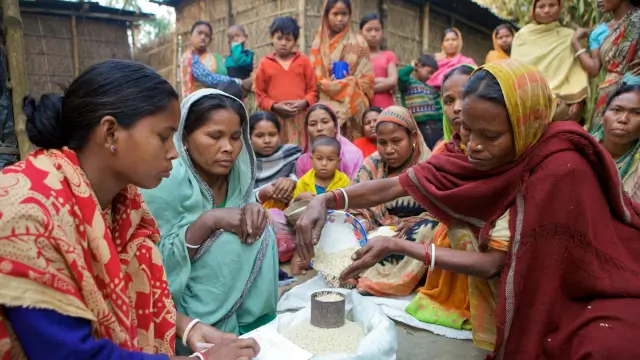
The Annapurna Bhandar Yojana is a state-sponsored retail outlet program where eligible families can purchase essential commodities like rice, wheat, sugar, and edible oil at prices significantly lower than market rates. The scheme operates through a network of government-authorized fair price shops locally known as "Annapurna Bhandar" outlets.
Key Features of the Scheme
The program offers monthly quota of food grains to registered beneficiaries. Each eligible household receives 5 kg of rice per person at ₹2 per kg, while wheat is provided at ₹3 per kg. The government bears the subsidy burden to keep prices affordable, allocating thousands of crores annually for this initiative.
Identity verification is mandatory, with beneficiaries required to link their ration cards to Aadhaar for transparent distribution. The system uses biometric authentication to prevent fraud and ensure only genuine beneficiaries receive benefits.
Eligibility Criteria
To qualify for Annapurna Bhandar benefits, applicants must be permanent residents of West Bengal. Families holding valid ration cards issued under the National Food Security Act are eligible. The income criteria typically align with SECC 2011 data, prioritizing Below Poverty Line (BPL) and Antyodaya cardholders.
Applicants must not receive similar benefits from any other state or central government food security program. Verification of residential address and family composition is done through local government officials.
Application Process
The application process has been simplified for 2026. Eligible families can apply through the official Portals like wbfood.in or visit nearest Gram Panchayat office. Required documents include Aadhaar card, residence proof, existing ration card, and passport-size photographs.
After submission, the application undergoes verification by local authorities. Once approved, the family receives a new or updated ration card with Annapurna Bhandar entitlement within 30-45 days.
Distribution Mechanism
The food grains are procured from Food Corporation of India (FCI) and distributed through a robust network of fair price shops. Each shop has an electronic point of sale (e-PoS) system that records transactions in real-time, ensuring transparency.
Beneficiaries can check their entitlement balance through SMS alerts and online portals. The government has also introduced mobile applications for convenient tracking of allocations and purchases.
Impact on West Bengal Citizens
The Annapurna Bhandar Yojana has significantly reduced food expenditure for qualifying families. On average, a family of five saves approximately ₹800-1000 monthly on essential commodities. The scheme has particularly benefited rural households and urban poor who spend a substantial portion of income on food.
Additionally, the program has created employment opportunities through fair price shop operations and related logistics, contributing to local economies across the state.
Challenges and Solutions
Despite its success, the scheme faces challenges including inconsistent supply in remote areas, delays in card digitization, and occasional quality concerns. The government has addressed these through improved supply chain management and regular quality checks.
Digital literacy initiatives have helped beneficiaries understand online tracking systems. The administration also conducts regular reviews and accepts feedback for continuous improvement.
Comparison with Previous Schemes
Unlike the earlier Lakshmi Bhandar scheme, Annapurna Bhandar emphasizes direct benefit transfer and better quality control. The consolidation of multiple schemes into one unified platform has simplified beneficiary access and reduced administrative overhead.
Last Updated: May 25, 2026 | Source: NPCI BASE Portal, Economic Times, Newsonair (Official)