
What You'll Learn
- How the Iran war pushed oil prices above $100 per barrel and gas past $4.50 per gallon
- Why the Strait of Hormuz closure disrupted 20% of global oil supply
- What the ceasefire deal means for oil prices, gas costs, and inflation in 2026
- How the Federal Reserve is responding to the 3.8% inflation spike caused by energy costs
The Biggest Oil Supply Shock Since the 1970s
When US and Israeli forces struck Iran on February 28, 2026, the global oil market experienced what the International Energy Agency called the largest supply disruption in the history of the global oil market. The conflict triggered an immediate crisis that pushed Brent crude from $71.32 to $77.24 per barrel within hours, eventually sending prices soaring above $100 a barrel at their peak.
The core of the crisis lies in the Strait of Hormuz, the narrow waterway through which roughly 20% of the world's oil supply flows daily. Iran's blockade of the strait, in retaliation for the airstrikes, effectively choked off one of the most critical arteries of global energy trade. The disruption was immediate and severe — shipping giants suspended operations, tanker traffic ground to a halt, and oil markets went into freefall.
According to Bloomberg analysis, the closure created a supply shortfall of approximately 11.1 million barrels per day against a global supply baseline of 106.9 million barrels per day in January and February. That kind of gap had not been seen since the 1970s energy crisis, and it sent shockwaves through every corner of the global economy — from Federal Reserve interest rate decisions to household grocery budgets.
How Oil Prices Moved From $71 to $100+ and Back Again
The oil price trajectory over the past three months tells a story of geopolitical whiplash. Here is how Brent crude moved through the crisis:
| Date / Period | Event | Brent Crude Price |
|---|---|---|
| Feb 27, 2026 | Pre-war baseline | $71.32/bbl |
| Mar 2, 2026 | US-Israel strikes Iran, Hormuz blocked | $77–$82/bbl (+10-13%) |
| Mar–Apr 2026 | Prolonged Hormuz blockade | $95–$106/bbl |
| Apr 7, 2026 | Trump announces 2-week ceasefire | Drops below $95/bbl |
| Apr 13, 2026 | Talks collapse, oil jumps back above $100 | $100+/bbl |
| Apr 17, 2026 | Iran says Hormuz is "open" | Drops below $84/bbl |
| May 20, 2026 | Trump says negotiations in "final stages" | Falls ~6% |
| May 29, 2026 | Oil drops 20% from 2026 peak on ceasefire optimism | ~$90/bbl |
The EIA's latest short-term energy outlook projects Brent crude averaging around $106 per barrel in May and June 2026, with prices expected to decline as Middle East oil production gradually recovers. However, Bank of America has warned that the Iran conflict has "wiped out" the global oil supply surplus, meaning prices could remain elevated well into the second half of the year.
Analysts at Macquarie Group had warned earlier in the year that if the war extended into summer, oil prices could hit $200 per barrel. That extreme scenario now appears less likely thanks to the ceasefire, but the fragile nature of the peace deal means the risk has not fully disappeared.
The Gas Price Pain: From $2.98 to $4.50 per Gallon
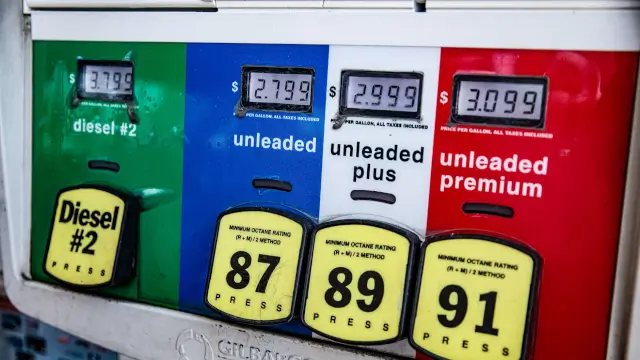
For American consumers, the Iran war translated directly into higher prices at the pump. Before the conflict began, the national average for a gallon of regular gasoline was approximately $2.98. By late April 2026, that average had surged to $4.30–$4.52 per gallon, representing an increase of over 50% in just two months.
According to the Center for American Progress, diesel prices rose even more sharply, climbing from $3.76 to $5.63 per gallon — a jump of 49.8%. These increases rippled through the entire economy, raising costs for trucking, shipping, agriculture, and food production.
A research model from The Daily Economy estimated that the war created a gasoline premium averaging about $0.85 per gallon, with the premium exceeding $1.15 at its peak relative to a no-war baseline. SeekingAlpha reported that gas prices hit a high of $4.46 per gallon in late May, though the recent ceasefire-driven oil decline has begun to pull pump prices down.
The most encouraging signal came on May 29, when gas prices recorded their biggest weekly drop of 2026, according to MSN. However, CNN reported that despite the ceasefire progress, gas prices could still potentially hit $5 per gallon this summer if the Strait of Hormuz does not fully reopen. The lag between crude oil price drops and pump price relief remains a key concern.
How the Ceasefire Is Reshaping Oil Markets
The ceasefire negotiations between the US and Iran have been a roller coaster since the first two-week truce was announced on April 7. Here is where things stand as of late May 2026:
What has happened: Oil has dropped 20% from its 2026 peak, the largest one-month decline since 2020. CNBC reported on May 29 that investors have grown increasingly optimistic about prospects for a long-lasting ceasefire deal that would unlock shipping through the Strait of Hormuz. The Dow surged over 1,300 points when the original ceasefire was announced in April.
What the deal requires: The tentative agreement involves a 60-day ceasefire extension and the reopening of the Strait of Hormuz to commercial shipping. Reuters reported on May 20 that Trump described negotiations as being in "final stages," while US Secretary of State Marco Rubio has been leading the diplomatic effort.
What could go wrong: The ceasefire has already collapsed once (April 13), causing oil to spike back above $100. Trump described the ceasefire as being "on life support" on May 11 after Iran rejected a US proposal. The upcoming Fed FOMC meeting in June adds another layer of uncertainty, as the central bank weighs whether to hold rates steady or respond to the energy-driven inflation.
The Wikipedia analysis of the economic impact notes that even if the Strait of Hormuz reopened immediately, the disruption has already caused a global oil market deficit that the EIA estimates will average 8.5 million barrels per day in Q2 2026. This means that while prices are falling, they are unlikely to return to pre-war levels quickly.
The Inflation Domino Effect: From Gas Pumps to Grocery Stores
The war's impact on US inflation has been severe and far-reaching. The Consumer Price Index rose 3.8% in April 2026 from a year earlier, the highest reading since May 2023. Energy prices alone jumped 3.8% on a monthly basis and are up 17.9% year-over-year, according to Fox Business.
The Dallas Federal Reserve published a research paper titled "The Impact of the 2026 Iran War on U.S. Inflation," which found that the conflict increased fourth-quarter-over-fourth-quarter headline PCE inflation by 0.6 percentage points. Core PCE — the Fed's preferred inflation gauge — was similarly affected, making the path back to the Fed's 2% target significantly more complicated.
But the inflation story goes beyond just energy. Goldman Sachs warned that gasoline price increases have represented a roughly $140 billion annualized headwind to household incomes. As Axios reported, Americans are spending down their savings, with CEO comments pointing to a slowdown among lower-income consumers. CNN reported that consumer sentiment hit a three-year low, with year-ahead inflation expectations rising to 4.8%.
The inflation pressure extends to food costs as well. Higher diesel prices have increased transportation and farming costs, pushing grocery prices upward. The Conversation noted that "inflation is now spreading through the US economy" beyond just gasoline, creating a broader cost-of-living squeeze that affects every household. This connects directly to the broader US fiscal picture and national debt concerns.
| Category | Pre-War (Feb 2026) | Current (May 2026) | Change |
|---|---|---|---|
| Regular Gas (avg/gal) | $2.98 | ~$4.30 | +44% |
| Diesel (avg/gal) | $3.76 | $5.63 | +49.8% |
| Brent Crude ($/bbl) | $71.32 | ~$90 | +26% |
| CPI Inflation (YoY) | ~2.8% | 3.8% | +1.0 pp |
| Consumer Sentiment | Moderate | 3-year low (-45) | Sharp decline |
The Fed's Dilemma: Hold, Cut, or Hike?
The Federal Reserve finds itself in an extraordinarily difficult position. Before the Iran war, rate cuts had been widely expected in 2026. Now, with inflation surging to 3.8% and energy costs driving the increase, the Fed has been forced to reconsider its entire rate path.
Fed officials have maintained that the current policy rate of 3.5% to 3.75% is appropriate, and that there is no urgency to move rates in either direction. The New York Times reported that officials believe the inflation spike is driven by a temporary supply shock rather than underlying demand pressure. However, with consumer inflation expectations rising to 4.8%, there is growing concern that inflation could become embedded in the economy.
Reuters noted that ceasefire-related optimism briefly revived bets on Fed rate cuts, but those bets remain fragile. If the ceasefire holds and oil prices continue to decline, the Fed may have room to resume its easing cycle later in 2026. But if fighting resumes or the Hormuz strait remains partially blocked, the Fed could be forced to consider rate hikes to combat persistent energy-driven inflation.
Powell said in March that Americans' inflation expectations would shape the Fed's response to the war. With expectations now running well above the 2% target, the pressure on the Fed to act is intensifying. This dynamic connects directly to our earlier analysis of the 10-year Treasury yield hitting 4.5%.
What a Real Peace Deal Would Mean for Oil and Gas Prices
If the US and Iran reach a durable agreement that fully reopens the Strait of Hormuz and restores oil flows, the impact on prices could be significant — but not immediate. The Atlantic described this as the "lag between an Iran deal and lower oil prices," noting that even with a deal, the physical flow of oil through the strait will take time to normalize.
Here is what analysts expect in different scenarios:
| Scenario | Brent Crude | Gas Price Impact | Likelihood |
|---|---|---|---|
| Durable peace deal + Hormuz fully reopens | $75–$85/bbl | Gas drops to $3.20–$3.50/gal within 4-6 weeks | Moderate |
| Ceasefire holds but Hormuz partially blocked | $90–$100/bbl | Gas stays above $4.00/gal | High |
| Ceasefire collapses, fighting resumes | $110–$150+/bbl | Gas spikes to $5.00+/gal | Low-Moderate |
| Prolonged war (Macquarie worst case) | $200/bbl | Gas exceeds $7.00/gal | Low |
The most likely scenario, according to current market positioning, is that the ceasefire holds in some form but the Hormuz strait does not fully normalize for weeks or months. Axios reported that even if the strait opened immediately, pump prices would "likely remain higher — maybe a lot higher — than pre-war levels" due to the lag between crude oil price changes and retail gasoline pricing.
How Consumer Spending Is Being Hit
The war's economic impact extends far beyond gas stations. Goldman Sachs published a detailed analysis warning that US consumers "could have a challenging few months ahead." The $140 billion annualized headwind from higher gasoline prices is forcing households to make difficult tradeoffs.
CNN reported that Americans are "shelling out for higher gas prices while cutting back" on other purchases. Retail sales data showed that while spending on gasoline and essentials rose, purchases of durable goods — furniture, electronics, appliances — declined as consumers redirected their budgets toward energy costs. The New York Times described this as "consumer spending, the engine of the US economy, is under pressure."
This consumer squeeze is particularly acute for lower-income households, which spend a larger share of their income on gasoline and energy. The economic ripple effects could include slower GDP growth, reduced business investment, and potential job losses in consumer-facing industries. If the ceasefire delivers sustained oil price relief, it could provide a meaningful boost to consumer confidence and spending in the second half of 2026.
FOMC Rate Hike 2026: How 3.8% Inflation and the Iran War Are Pushing the Fed Toward Its First Rate Increase
What Investors Should Watch Next
For investors and consumers alike, several key developments will determine whether the oil price relief translates into real economic improvement:
1. Strait of Hormuz reopening timeline: The physical reopening of the strait to commercial shipping is the single most important variable. Even with a peace deal, mines need to be cleared, shipping lanes need to be restored, and insurance costs need to normalize. This process could take weeks to months.
2. Iran ceasefire durability: The ceasefire has already collapsed once. If fighting resumes, all bets are off. Markets are pricing in optimism, but the history of this conflict shows that peace can evaporate quickly.
3. Fed June FOMC meeting: The upcoming FOMC decision will signal whether the Fed views the inflation spike as temporary or structural. A hawkish tone could weigh on stocks even as oil prices fall.
4. Gas price trajectory: Watch the AAA national average. If gas drops below $4.00 per gallon in the coming weeks, it would signal that crude oil declines are finally reaching consumers. If it stays above $4.30, the inflation pain continues.
5. Global oil production recovery: The EIA projects that Middle East production will rise in the second half of 2026, but any delay in ceasefire implementation could push that timeline back.
The bottom line: The US-Iran ceasefire has created a real window of opportunity for oil prices and gas costs to decline, but the path forward remains uncertain. Consumers should expect gas prices to remain elevated through at least mid-summer, with meaningful relief likely arriving only if the Hormuz strait fully reopens and oil production normalizes.
Conclusion
The US-Iran war has delivered the most significant oil supply shock since the 1970s, pushing gas prices up over 50%, driving inflation to 3.8%, and forcing the Federal Reserve to shelve rate cut plans. The ceasefire announced in late May has triggered a dramatic 20% decline in oil prices from their peak, offering genuine hope that relief is on the way.
However, history shows that geopolitical ceasefires are fragile, and the lag between crude oil price drops and pump price relief means consumers will continue to feel the pinch for weeks to come. The key variables to watch are the physical reopening of the Strait of Hormuz, the durability of the ceasefire, and the Fed's response at its June meeting. For now, the trajectory is pointing in the right direction — but the road to pre-war energy prices remains long and uncertain.