
What You'll Learn
- The exact IPO timeline — pricing date, roadshow details, and when you can buy shares
- Why the $1.75 trillion valuation is both historic and controversial
- How to buy SpaceX stock — retail access, broker options, and pre-IPO strategies
- Key risks that could make or break your investment decision
What Is the SpaceX IPO?
The SpaceX IPO is the most anticipated stock market event of 2026. Elon Musk's aerospace and artificial intelligence company has officially filed its S-1 prospectus with the U.S. Securities and Exchange Commission, setting the stage for a public listing on the Nasdaq stock exchange under the ticker SPCX.
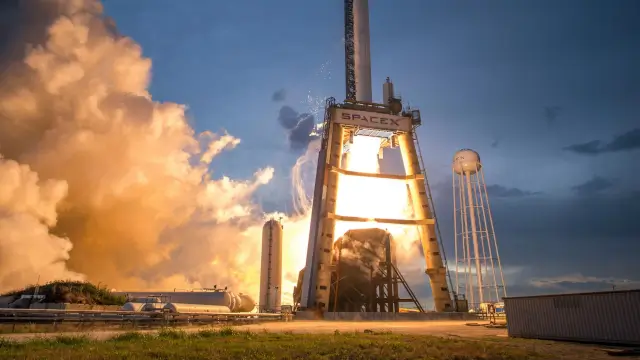
Founded in 2002 and headquartered in Starbase, Texas, SpaceX has grown from a scrappy rocket startup into the world's most dominant launch provider. As of 2026, the company conducts more orbital launches annually than any other provider — including private competitors and national programs like the Chinese space program. Its Starlink satellite internet constellation serves millions of customers worldwide, and its Starship V3 rocket just completed its historic maiden flight.
Goldman Sachs is leading the offering as left lead bookrunner, joined by Morgan Stanley, Bank of America, Citigroup, and JPMorgan Chase. The IPO is expected to raise between $75 billion and $80 billion, which would triple Saudi Aramco's 2019 IPO record of $25.6 billion.
Key IPO Timeline: Every Date That Matters
The SpaceX IPO has a clear roadmap with critical dates investors need to mark. Here's the complete timeline based on Reuters reporting and SEC filings:
| Date | Event | What It Means |
|---|---|---|
| April 1, 2026 | Confidential S-1 Filing | SpaceX filed confidentially with the SEC, kicking off the IPO process |
| May 15, 2026 | Public S-1 Prospectus | Full financial details, revenue breakdown, and risk factors made public |
| May 22, 2026 | Starship V3 Launch | Maiden flight achieved key milestones, strengthening the IPO case |
| Late May 2026 | Institutional Roadshow | SpaceX executives pitch to institutional investors alongside Goldman Sachs |
| June 4, 2026 | Roadshow Kickoff | Formal presentations to investors begin; price range announcement expected |
| June 11, 2026 | Pricing Day | Final share price and valuation range set based on bookbuilding |
| June 12, 2026 | First Day of Trading | SPCX begins trading on Nasdaq — the moment retail investors can buy |
| September 2026 | First Earnings Call | SpaceX's first quarterly report as a public company |
| December 2026 | Lockup Expiration | Early investors and insiders can sell shares — potential volatility |
Nasdaq's 15-day fast-track IPO rule could potentially accelerate the debut, though the June 12 date remains the primary target. The timeline can shift if the SEC requests additional disclosures or if market conditions deteriorate during the roadshow.
The $1.75 Trillion Valuation: Is It Justified?
SpaceX is targeting a valuation between $1.75 trillion and $2 trillion, which would make it one of the world's most valuable publicly traded companies — surpassing Tesla's current market cap. But is this number justified?
The valuation represents a significant jump from the $1.25 trillion price tag in February 2026, when SpaceX merged with xAI, Elon Musk's artificial intelligence startup. That merger means new investors will be buying in at a historically high entry point.
The bulls point to SpaceX's $28.5 trillion addressable market spanning satellite internet, launch services, space tourism, and AI-powered data centers. The company's Starlink constellation alone serves millions of customers and accounts for 69% of total revenue.
| Metric | SpaceX (Target) | Saudi Aramco (2019 IPO) |
|---|---|---|
| Valuation | $1.75 Trillion | $1.7 Trillion |
| Amount Raised | $75 Billion | $25.6 Billion |
| Exchange | Nasdaq (SPCX) | Tadawul (Riyadh) |
| Lead Underwriter | Goldman Sachs | JPMorgan / Citi |
| Retail Allocation | Record-high (unspecified %) | Minimal (institutional focus) |
The bears, however, point to several concerns. SpaceX burned through significant cash in Q1, including $131 million spent on Cybertrucks. X (formerly Twitter) advertising revenue declined during a technology rebuild. And Musk's stock awards only vest when a "permanent human colony" is established on Mars — a timeline measured in decades, not quarters.
Starship V3: The Launch That Sealed the Deal
Just days before the IPO roadshow kicked off, SpaceX achieved a critical milestone: the maiden flight of Starship V3 on May 22, 2026. The 408-foot-tall rocket — the biggest and most powerful iteration of Starship yet — completed a full suborbital flight from Starbase, Texas.
Starship V3 is the first variant equipped with SpaceX's new Raptor 3 engine, the sleekest, lightest, and most powerful Raptor the company has built. The flight achieved several key milestones including increased propellant tank volume, a new engine start-up method, and improved reaction-control systems — even as it lost its first-stage booster shortly into the flight.
The timing was no accident. By demonstrating Starship V3's capabilities just before the roadshow, SpaceX gave institutional investors tangible proof that the company's Mars ambitions are backed by real engineering progress. Space stocks across the board surged on the news, with Rocket Lab, RDW, and other space-related companies flying higher.
How to Buy SpaceX Stock (SPCX)
Once SPCX begins trading on June 12, buying shares will be straightforward through most major brokerage platforms. However, there are important considerations every investor should understand before jumping in.
Direct Purchase (Post-IPO): After June 12, any investor with a brokerage account can buy SPCX shares just like any other Nasdaq-listed stock. Platforms like Fidelity, Charles Schwab, Robinhood, and E*TRADE will likely offer access. The key is having your account funded and ready before the opening bell.
Pre-IPO Access: Some platforms offer pre-IPO share access through secondary markets, but this comes with significant restrictions. Accredited investor requirements, lockup periods, and premium pricing (often 20-40% above the IPO price) make this route risky for most retail investors.
Indirect Exposure: If you can't buy SPCX directly, consider companies that benefit from SpaceX's success. Rocket Lab (RKLB), which provides launch services and satellite components, has historically surged alongside SpaceX news. Defense contractors with NASA contracts and satellite communications companies also offer indirect exposure.
IPO Day Strategy: History shows that mega-IPOs often experience significant first-day pops followed by volatility. The Saudi Aramco IPO gained modestly on day one but then traded sideways for months. Consider waiting for the initial frenzy to settle before establishing a full position.
What SpaceX's Revenue Really Looks Like
Understanding SpaceX's revenue structure is essential for evaluating whether the $1.75 trillion valuation makes sense. The company's S-1 filing reveals a diversified business with multiple revenue streams.
Starlink (69% of Revenue): The satellite internet constellation is SpaceX's cash cow. With millions of subscribers across residential, business, and government segments, Starlink generates predictable recurring revenue. The service competes directly with traditional ISPs and has become critical infrastructure in rural and remote areas.
Launch Services: SpaceX's Falcon 9 and Falcon Heavy rockets dominate the commercial launch market. NASA contracts, military launches, and commercial satellite deployments provide steady income. The company's reusable rocket technology has dramatically reduced launch costs, giving it a significant competitive advantage.
xAI Integration: The February 2026 merger with xAI adds an artificial intelligence dimension to SpaceX's business. While the financial details of this integration are still emerging, the combination of space infrastructure and AI capabilities creates unique opportunities in orbital data centers and satellite-based AI processing.
The Mars Factor: Musk's ultimate vision — establishing a permanent human colony on Mars — is both SpaceX's greatest ambition and its biggest risk. The stock awards structure ties executive compensation to this goal, creating a unique alignment between leadership incentives and long-term company objectives.
Risks and Concerns for Investors
Every investment carries risk, and the SpaceX IPO is no exception. Here are the key concerns investors should weigh:
Valuation Stretched: At $1.75 trillion, SpaceX would trade at a premium to many established tech giants. The company needs to sustain rapid revenue growth to justify this multiple. Any slowdown in Starlink subscriber growth or launch contract wins could trigger a sharp correction.
Musk Dependency: SpaceX's success is deeply tied to Elon Musk's vision and leadership. His involvement in multiple companies (Tesla, xAI, X, Neuralink, The Boring Company) raises questions about focus and bandwidth. Any reputational or legal issues affecting Musk could impact SpaceX's stock.
Lockup Expiration: When insider shares unlock in December 2026, selling pressure could be significant. Early investors sitting on massive paper gains may take profits, creating downward pressure on the stock price.
Regulatory Risk: The space industry faces evolving regulations from the FAA, FCC, and international bodies. Any restrictions on satellite launches, orbital debris, or spectrum allocation could impact Starlink's growth trajectory.
Competitive Landscape: While SpaceX leads in launch services, competitors are emerging. Blue Origin, Rocket Lab, and Chinese launch providers are investing heavily in reusable rocket technology. The satellite internet market also faces competition from Amazon's Project Kuiper.
How SpaceX Compares to Other Mega IPOs
The SpaceX IPO doesn't exist in a vacuum. It's part of a broader trend of mega-IPOs reshaping the market landscape in 2026. Here's how it stacks up:
OpenAI IPO: The ChatGPT maker is reportedly eyeing a public offering in the second half of 2026. While specific details remain uncertain, OpenAI's IPO would compete with SpaceX for investor attention and capital. Both companies represent the cutting edge of AI and technology.
Anthropic IPO: The Claude AI developer is also considering going public in late 2026. Together with OpenAI and SpaceX, these three IPOs could drain significant liquidity from the market, potentially creating headwinds for all three offerings.
Historical Context: The largest IPOs in history include Saudi Aramco ($25.6B in 2019), Alibaba ($25B in 2014), and SoftBank ($23.5B in 2018). SpaceX's $75 billion raise would dwarf all of these combined, making it a truly unprecedented market event.
Warren Buffett's Berkshire Hathaway sits on a $400 billion cash pile, and analysts are watching closely to see whether the Oracle of Omaha participates. Buffett's involvement (or lack thereof) could signal how seasoned value investors view the SpaceX opportunity.
Conclusion
The SpaceX IPO represents a once-in-a-generation investment opportunity — and a once-in-a-generation risk. With a $1.75 trillion valuation, $75 billion in capital raising, and a June 12 debut on Nasdaq, this is the largest IPO in history by every metric.
For investors, the key is balancing excitement with discipline. SpaceX has proven it can land rockets, build the world's largest satellite constellation, and now launch the most powerful rocket ever built. But at $1.75 trillion, the bar for continued execution is extraordinarily high.
The smartest approach? Watch the roadshow developments closely, wait for the initial IPO volatility to settle, and consider building a position over time rather than going all-in on day one. SpaceX is building the future of humanity — but your portfolio still needs to survive the present.
Last Updated: May 31, 2026 | Source: Reuters, CNBC, SEC EDGAR, SpaceX S-1 Prospectus (Official Filing)